What is a Centrifugal Blower and How Does it Work?
Centrifugal blowers are vital components in various industries. These machines generate airflow through an innovative mechanism. They operate using a rotating impeller that increases the speed of air and directs it outward.
Understanding how centrifugal blowers work is crucial for efficiency. Their design allows for the effective movement of air, making them suitable for numerous applications. For example, they are commonly used in HVAC systems and material handling. The ability to select specific models based on performance is essential.
However, many users may not fully grasp their importance. Some might overlook routine maintenance, impacting performance. Without proper care, these devices can become less efficient, leading to higher energy costs. Exploring their functionality and maintenance can enhance operational success in various sectors. This knowledge is necessary for anyone relying on centrifugal blowers.
What is a Centrifugal Blower?
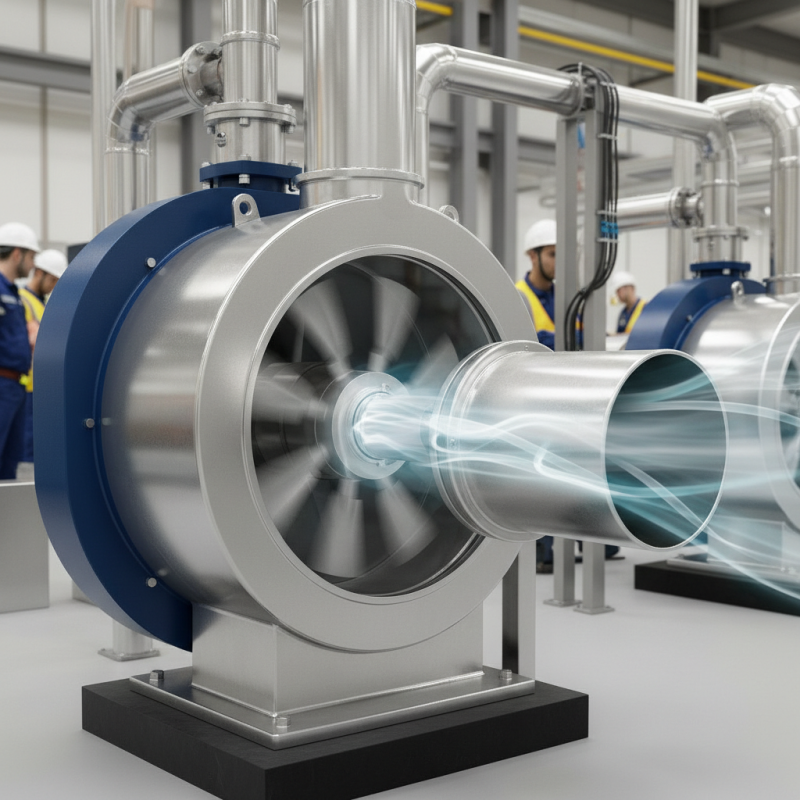
Centrifugal blowers are vital machines in various industries. They are designed to move air or gas efficiently. The key component is the fan situated inside a casing. As it spins, it draws air in and accelerates it outward. This creates a flow of air. You can often hear their distinct hum in factories or ventilation systems.
The operation of a centrifugal blower is intriguing. When the fan blades rotate, they push air through the casing. The design allows for pressure build-up. This is crucial for applications that require a strong airflow, such as drying processes or pneumatic conveying. However, not all centrifugal blowers perform equally. Some may struggle with efficiency. Poor design choices can lead to increased power consumption. It's essential to reflect on these aspects when selecting a blower for your needs.
In practice, maintenance is another challenge. Regular checks on bearings and fan blades are necessary. Neglecting these can lead to reduced performance. Users often overlook simple issues, causing larger problems later. Understanding how a centrifugal blower works can help in troubleshooting these common pitfalls. This awareness promotes better operation and longevity of the machine.
Key Components of a Centrifugal Blower
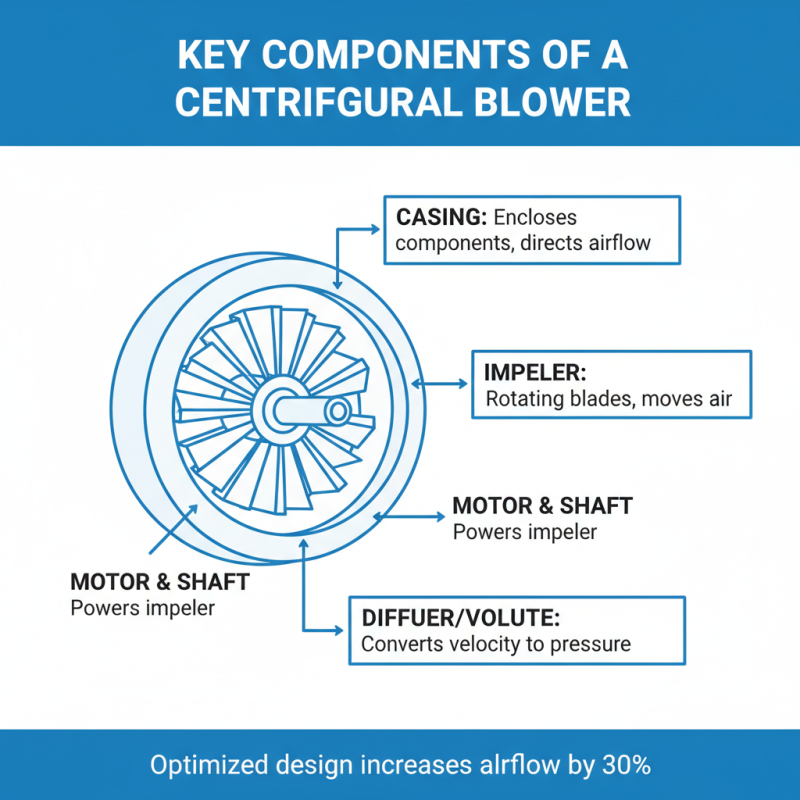
Centrifugal blowers are essential in various industrial applications. Understanding their key components can help optimize their performance. At the heart of a centrifugal blower is the impeller. This rotating part moves air or gas with its blades, converting mechanical energy into kinetic energy. The design of the impeller affects efficiency and airflow. A well-designed impeller can increase airflow by up to 30%, according to industry reports.
Another crucial component is the volute. The volute directs the flow of air from the impeller into the outlet. Its shape varies depending on the design, affecting pressure and flow characteristics. A poorly shaped volute can lead to turbulence, reducing efficiency.
Tips: Regular maintenance is vital. Ensure that filters are clean to avoid airflow restrictions. Monitor noise levels. Unusual sounds may indicate wear in the impeller. Always track energy consumption; higher usage may signal inefficiencies. Understanding these details is essential for reliability and peak performance in various applications, including HVAC systems or industrial processes.
The Operating Principle of Centrifugal Blowers
Centrifugal blowers are fascinating machines that play a crucial role in various industrial processes. They operate on a principle of converting rotational energy into fluid flow. The heart of the blower is the impeller, which spins rapidly, creating a low-pressure area that draws air in. As the air moves through the impeller, it is subjected to centrifugal force, which pushes it outward. This process compresses the air, increasing its pressure and velocity before releasing it through the outlet.
The design of a centrifugal blower allows for efficient airflow. The shape of the impeller blades greatly affects performance. Blades that are too flat or angled improperly can lead to turbulence and decreased efficiency. This can be frustrating for users relying on consistent airflow. Additionally, maintaining the correct speed is critical. Too fast, and the blower risks damage; too slow, and it won’t meet airflow requirements.
It’s essential to consider how these machines are integrated into larger systems. A poorly designed connection can create bottlenecks, affecting overall performance. Users often overlook maintenance, leading to wear and tear that diminishes functionality. Regular inspections and attention to details can prevent issues. Understanding these principles helps users get the most out of centrifugal blowers.
What is a Centrifugal Blower and How Does it Work?
| Feature |
Description |
| Airflow |
Centrifugal blowers provide high air volume at relatively low pressure. |
| Operating Principle |
They operate by utilizing a rotating impeller to impart energy to the air. |
| Applications |
Commonly used in HVAC systems, dust collection, and drying processes. |
| Efficiency |
Typically more efficient than positive displacement blowers in certain applications. |
| Maintenance |
Requires regular maintenance to ensure longevity and performance. |
| Noise Level |
Can produce significant noise; sound-dampening measures may be needed. |
| Types |
Includes single inlet, double inlet, and multi-stage configurations. |
Applications of Centrifugal Blowers in Various Industries
Centrifugal blowers play a vital role in many industries. They generate high volumes of air at relatively low pressures. This makes them ideal for applications like material handling and air supply.
In wastewater treatment, centrifugal blowers are essential. They aerate water, helping bacteria break down waste. This process improves water quality. In manufacturing, these blowers transport dust and granules efficiently. They maintain a clean environment and ensure product quality. In the food industry, hygiene is critical. Centrifugal blowers help control air flow in packaging and processing areas.
However, using these blowers isn't without challenges. Noise levels can be high, impacting work environments. Maintenance is crucial to avoid downtime. If not regularly checked, efficiency can drop significantly. Overall, centrifugal blowers are invaluable but require attention and care.
Advantages of Using Centrifugal Blowers over Other Types
Centrifugal blowers are essential in various industries for air movement. Their design allows them to generate high pressure, making them effective for many applications. Unlike other blowers, they handle larger volumes of air well, and this efficient airflow often leads to energy savings.
One significant advantage of centrifugal blowers is their ability to operate quietly. In settings where noise is a concern, these blowers minimize disruption. They also tend to be more compact than other blower types, saving valuable space in tight environments. However, they may not perform as well in situations requiring high static pressure. Users must assess their needs carefully.
Durability is another highlight. Centrifugal blowers often require less maintenance than other types, thanks to fewer moving parts. Over time, this can lead to lower operational costs. Yet, it's crucial to consider variations in design and suitability for specific tasks. Choosing the right blower involves understanding these nuances. Each situation demands a tailored approach to maximize the benefits.