How to Choose a Permanent Magnet Synchronous Motor for Your Project?
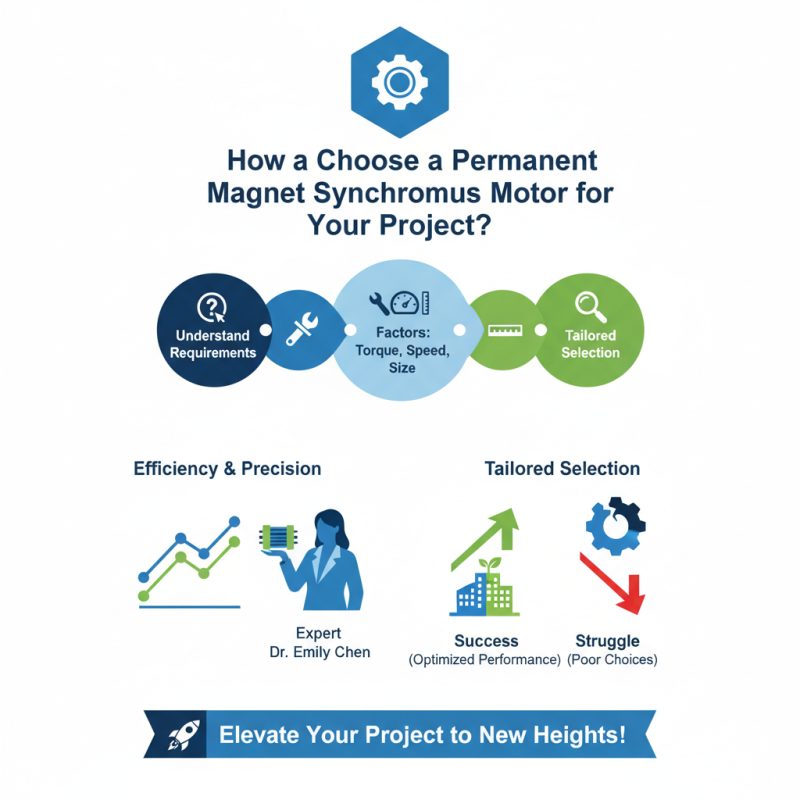
Choosing the right Permanent Magnet Synchronous Motor (PMSM) can significantly impact your project's success. Renowned expert Dr. Emily Chen states, "The efficiency and precision of a PMSM are unrivaled in various applications." This highlights the importance of careful selection.
When considering a PMSM, factors like torque, speed, and size matter. Each project has unique needs. Understanding these requirements is crucial. One choice might suit one application but not another. Expressing doubts about your selection process can lead to better decisions.
Real-world examples show how businesses thrive by harnessing PMSM technology. However, some have struggled due to poor choices. It's essential to analyze your project's specifics. A tailored approach can optimize performance, making the difference between success and failure. A well-chosen PMSM can elevate your project to new heights.
Understanding the Basics of Permanent Magnet Synchronous Motors
Permanent Magnet Synchronous Motors (PMSMs) are widely used in various applications. Understanding their basics is essential to selecting the right motor for your project. These motors utilize permanent magnets, which create a magnetic field in the rotor. This design leads to high efficiency, especially in variable-speed operations. Their compact size also offers advantages in tight spaces.
When considering a PMSM, you should evaluate its torque and speed characteristics. Think about the power supply and control methods. Different systems may require specific configurations. The control strategy can significantly impact performance. A common challenge here is ensuring compatibility with existing systems.
Another aspect to ponder is thermal performance. PMSMs can generate heat during operation. It's crucial to plan for adequate cooling solutions. They also require maintenance checks over time, although less than other motor types. Balancing these factors can be tricky. Yet, understanding the motor's fundamentals will guide you in making informed decisions.
How to Choose a Permanent Magnet Synchronous Motor for Your Project?
| Specification |
Value |
| Rated Power (kW) |
1.5 |
| Operating Voltage (V) |
400 |
| Rated Speed (RPM) |
3000 |
| Efficiency (%) |
90 |
| Torque (Nm) |
5.0 |
| Ambient Temperature Range (°C) |
-20 to 50 |
| Weight (kg) |
12 |
| Cooling Method |
Air-Cooled |
| IP Rating |
IP55 |
| Control Type |
Field-Oriented Control |
Key Factors to Consider When Selecting a Motor
When selecting a permanent magnet synchronous motor (PMSM), consider the application’s specific needs. Think about the required power output. This determines the motor size and efficiency. Voltage ratings are also essential. Use the correct voltage for safety and performance.
Another crucial aspect is torque. High torque is vital for some applications, while others may need speed. Understanding the operational environment is important too. Will the motor face high temperatures or moisture? Choose models designed for those conditions.
Noise levels may affect usability. Some applications require quiet operations, demanding careful selection.
Lastly, consider the control methods. Some projects may need advanced control systems, adding complexity. Reflect on your project’s future. Are upgrades or changes likely? Choosing the right motor now can save headaches later. A well-thought-out choice today leads to better efficiency tomorrow.
Evaluating Performance Requirements for Your Application
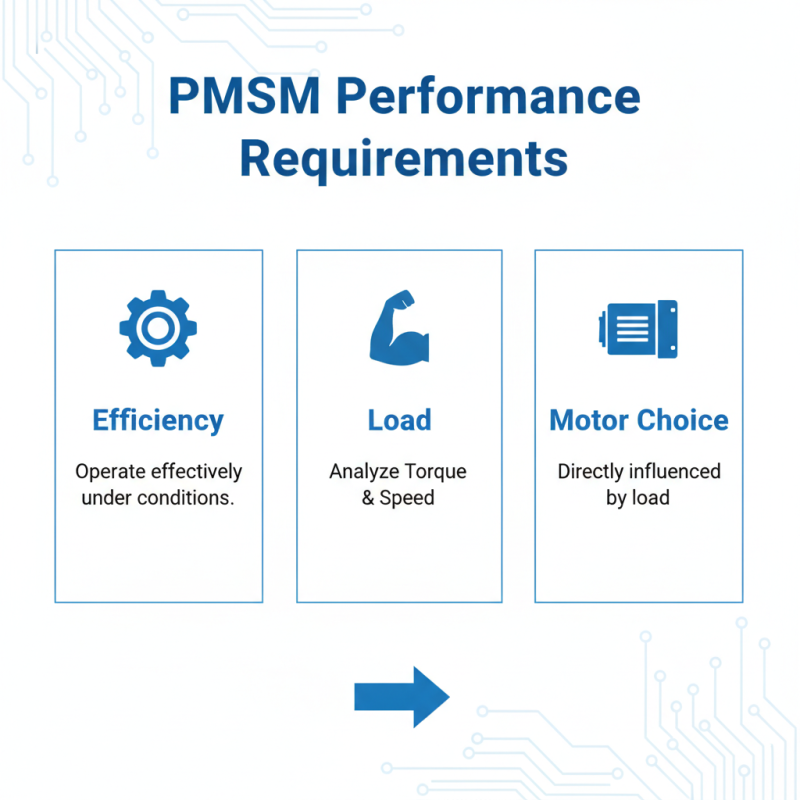
When evaluating performance requirements for a project, several factors must be considered. Efficiency is crucial. A permanent magnet synchronous motor (PMSM) should operate effectively under the specific conditions of your application. What load will it handle? Analyze the torque and speed ranges needed. This information directly influences your motor choice.
Another important aspect is the operating environment. Will the motor be exposed to dust, moisture, or extreme temperatures? These elements will affect the motor's lifespan. Additionally, think about power supply. Is there a steady source available? Or will fluctuations occur? Understanding energy demands is essential for determining the right motor type.
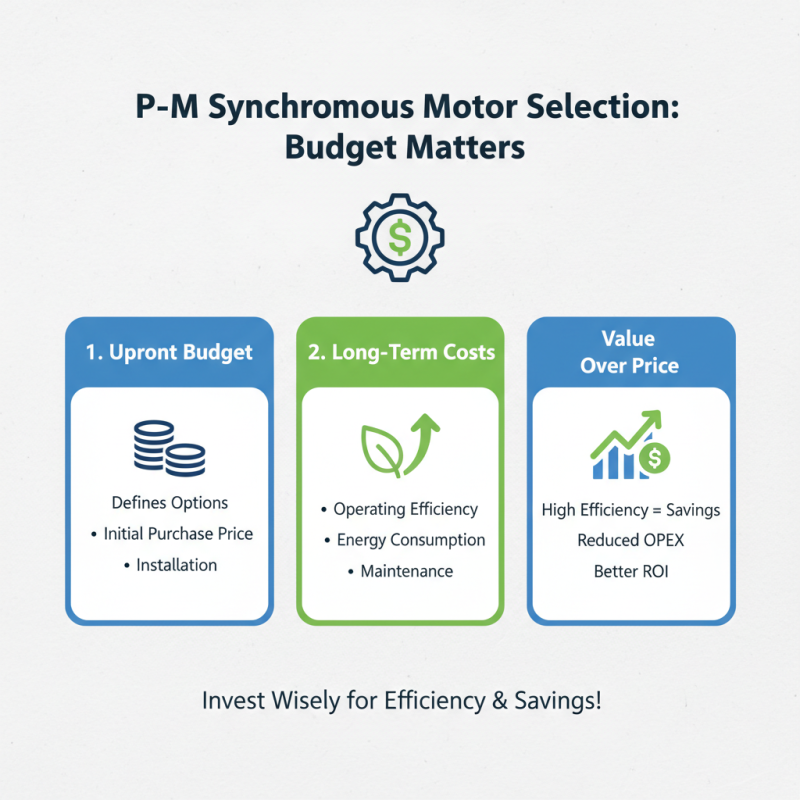
Take time to reflect on your project's overall goals. Are you aiming for maximum efficiency or is a lower cost more appealing? Sometimes, the cheapest option may not deliver the desired performance. This balancing act requires careful assessment. Be realistic about your requirements and the potential trade-offs. Each decision affects the final outcome of your project.
Installation and Maintenance Considerations for the Chosen Motor
Installing a permanent magnet synchronous motor (PMSM)
requires careful consideration to ensure optimal performance. The location for installation should be
dry and free from dust. Humidity can cause
corrosion. The ambient temperature should not exceed
40°C. Overheating can reduce motor lifespan. Regular checks
on wiring and connections are vital. Loose connections can lead to failure.
Maintenance also plays a significant role. The NATIONAL ELECTRICAL MANUFACTURERS ASSOCIATION (NEMA)
emphasizes routine inspections every three months. This involves checking bearings, replacing lubricants,
and ensuring alignment. Vibration analysis is key to
detecting issues early. A report from the
Electric Power Research Institute suggests that improper maintenance can reduce motor efficiency by
10-20%. Adjusting settings based on load requirements helps maintain performance.
Keep in mind that not all environments suit PMSMs. Noise-sensitive applications may require additional
soundproofing measures. If not addressed, vibration can create operational noise.
Users may often overlook this detail. Selecting the right motor may require revisiting initial specifications
after installation. An adaptable mindset is crucial for long-term reliability.