How to Choose the Right Magnetic Suspension Centrifugal Blower?
Choosing the right Magnetic Suspension Centrifugal Blower is crucial for optimal performance in various applications. According to Dr. Emily Chen, an expert in airflow technology, "Selecting the perfect blower can significantly impact efficiency and energy savings." Her insights highlight the importance of careful evaluation.
Many factors influence the selection process. For instance, airflow rate, static pressure, and noise levels are key parameters. Understanding each component can be challenging. Yet, making an informed choice enhances operational outcomes.
The Magnetic Suspension Centrifugal Blower stands out for its advanced design and energy efficiency. Users may overlook factors like installation space and maintenance needs. This oversight can lead to costly mistakes down the road. Choosing wisely means considering both technical specifications and practical aspects.
Best Practices for Selecting a Magnetic Suspension Centrifugal Blower
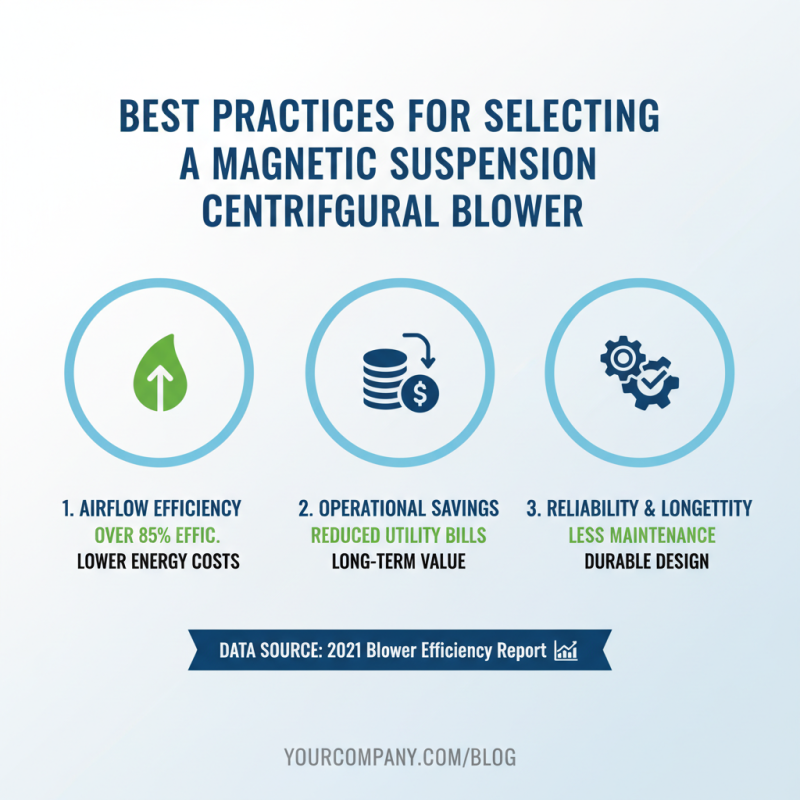
Choosing the right magnetic suspension centrifugal blower involves careful consideration of several key factors. One critical aspect is airflow efficiency. According to the 2021 Blower Efficiency Report, magnetic suspension blowers can operate with over 85% efficiency in various applications. This means lower energy consumption and reduced operational costs for facilities.
Another important factor is noise reduction. Magnetic suspension technology significantly minimizes vibrations, leading to quieter operations. A study published in the Journal of Environmental Engineering found that noise levels in magnetic blowers are typically below 65 dB. This can enhance workplace comfort, especially in sensitive environments.
It’s also essential to evaluate maintenance requirements. While magnetic suspension blowers have lower maintenance needs due to fewer moving parts, periodic inspections are still necessary. Failing to schedule these can lead to unexpected downtime. Additionally, determining the right blower size and capacity is critical. Oversizing can waste energy, while undersizing may not meet system demands. Using detailed performance data, such as air pressure and flow rates, enables more informed decisions. Every choice requires reflection and a comprehensive understanding of the application context.
Key Performance Indicators: Understanding Blower Efficiency Ratings
When selecting a magnetic suspension centrifugal blower, understanding efficiency ratings is crucial. These ratings reflect how well the blower converts energy into airflow. A higher efficiency indicator means better performance and cost savings over time. Look for tools that provide clear metrics, such as power consumption and airflow volume. These details help in assessing the blower’s overall effectiveness.
Blower efficiency ratings can sometimes be misleading. Not every product shows its capabilities clearly. It's essential to consider the blower's operational conditions. For instance, temperature and pressure can affect performance. Evaluating how a blower operates under specific circumstances aids in making an informed choice. Pay attention to real-world testing and feedback, as lab results might not fully capture operational challenges.
Consulting industry experts or seeking user experiences can provide additional insights. Reliability comes from collective knowledge. Do not rely solely on advertised figures. Positive outcomes often stem from thorough research and understanding of performance criteria. Reflect on your specific needs and operational requirements before making a decision. This careful consideration will guide you towards a more suitable blower for your application.
Noise Levels and Vibration Control: Importance for Industrial Applications
Noise levels and vibration control are critical factors in industrial applications when selecting a magnetic suspension centrifugal blower. Excessive noise can disrupt the work environment. It affects employee morale and productivity. Equipment generating high noise levels may also violate regulations. Proper evaluation of decibel ratings is essential to ensure compliance and comfort.
Vibration control is equally significant. Uncontrolled vibrations can shorten equipment lifespan and lead to mechanical failures. They can cause wear and tear on components. This situation not only increases maintenance costs but can also halt production. Effective design features, like isolation mounts and balanced rotors, can greatly reduce vibrations.
Incorporating these elements into your selection process requires careful consideration. Understanding the specific needs of the application is crucial. Evaluate both current and future operational demands. Also, reflecting on noise and vibration mitigation strategies empowers better decision-making. Industrial environments can be unforgiving; a little oversight can lead to significant setbacks. Prioritize both efficiency and workplace wellbeing in the selection of a blower system.
Noise Levels and Vibration Control of Magnetic Suspension Centrifugal Blowers
This bar chart illustrates the average noise levels (in Decibels) and vibrations (in Millimeters per Second) of different types of magnetic suspension centrifugal blowers, highlighting their importance for industrial applications.
Cost Considerations: Analyzing Long-Term Value Over Initial Investment
When selecting a magnetic suspension centrifugal blower, it's crucial to analyze long-term value against the initial investment. Although these blowers may have a higher upfront cost, their operational efficiency can yield substantial savings over time. Consider the energy consumption and maintenance costs. A unit with advanced magnetic suspension technology typically requires less energy, leading to lower electric bills.
However, it’s not just about costs. Evaluating your specific needs is essential. The blowers may not suit all applications equally. Sometimes, the most expensive option might not provide the necessary features for your system. Ensure that the blower’s design aligns with your operational goals. Look for features that meet your unique requirements.
Over time, weigh the reliability of the product against its price. A cheaper alternative might seem appealing initially. Nonetheless, it could end up costing more due to frequent repairs or replacements. Reflect on how often you want to deal with these issues. Prioritize the longevity of the blower. Investing in a robust and efficient solution can lead to better performance and reliability as years go by.
How to Choose the Right Magnetic Suspension Centrifugal Blower? - Cost Considerations: Analyzing Long-Term Value Over Initial Investment
| Feature |
Initial Cost ($) |
Annual Operating Cost ($) |
Expected Lifespan (Years) |
Total Cost Over 10 Years ($) |
Energy Efficiency (%) |
| Model A |
5000 |
600 |
10 |
11000 |
85 |
| Model B |
8000 |
450 |
12 |
15400 |
90 |
| Model C |
6000 |
500 |
8 |
7400 |
80 |
| Model D |
9000 |
400 |
15 |
11400 |
95 |