INQUIRY
Leave Your Message

10 Best Centrifugal Fan Manufacturers for Global Buyers

Choosing the right Centrifugal Fan manufacturer can influence airflow stability, energy use, noise levels, and long-term maintenance costs. Global buyers often compare suppliers across very different industrial environments. A food-processing plant may need stainless steel construction and washdown-friendly design. A cement facility may require abrasion-resistant impellers and stronger protective coatings. These details can change the purchasing decision.

This guide reviews 10 leading centrifugal fan manufacturers for international buyers. The evaluation focuses on engineering experience, product range, manufacturing capabilities, quality control, and customer support. It also considers practical evidence, such as performance curves, vibration testing, balancing records, material options, and documented factory inspections. Reliable manufacturers should explain how their fans perform under specific pressure, temperature, and duty conditions. Clear technical communication matters. So does spare-parts availability.

No ranking is permanent. Market coverage changes. Product quality can also vary between models, factories, and regional partners. That limitation deserves attention. Buyers should verify current certifications, warranty terms, delivery schedules, and after-sales responsibilities before signing a contract. A polished website is not enough. Ask for references from comparable installations, detailed drawings, and test data that match the proposed operating point. Small omissions can become expensive later. This overview provides a practical starting point, not a substitute for technical due diligence.
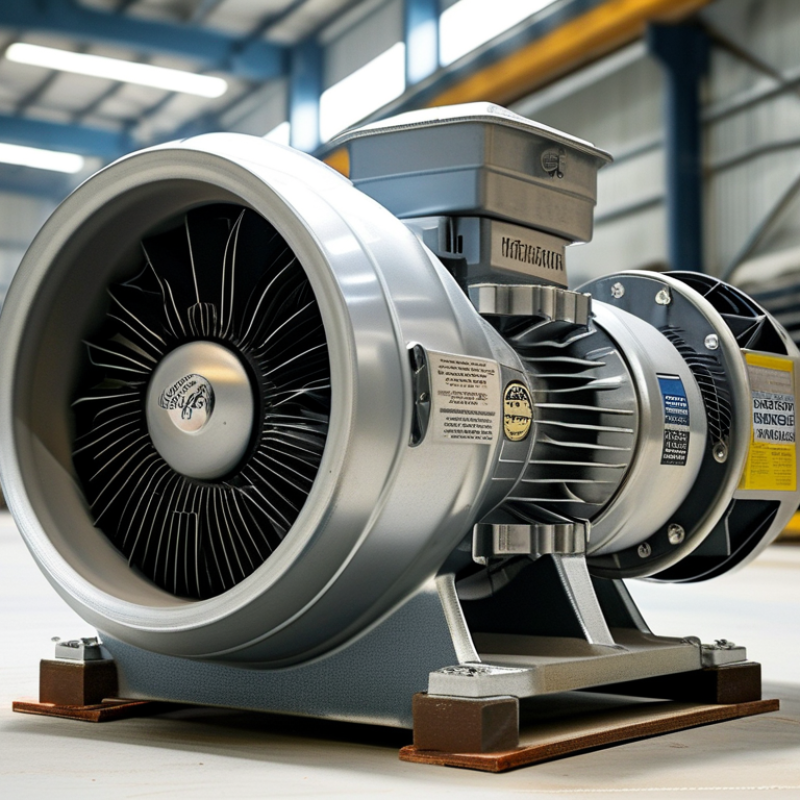
10 Best Centrifugal Fan Manufacturers for Global Buyers

What Defines a Top Centrifugal Fan Manufacturer for Global Buyers

A top centrifugal fan manufacturer proves performance beyond a catalog curve. Global buyers should request certified airflow, pressure, efficiency, noise, and vibration data. Testing should follow recognized methods, such as ISO 13349 and AMCA procedures. The International Energy Agency reports that electric motor systems consume roughly half of global electricity. Fan efficiency therefore affects operating budgets and emissions, not only equipment selection. A reliable supplier also explains duty-point changes, ambient temperature limits, materials, and maintenance intervals in clear language.

Field audits often reveal an uncomfortable detail: a cheaper fan can create higher costs through throttling, belt losses, poor balancing, or frequent bearing replacement. The U.S. Department of Energy has noted that fan systems may represent a significant share of commercial building electricity use, especially when systems operate continuously. Ask for tested efficiency at your real duty point, not only the best value on a marketing graph. Check factory quality controls, spare-part availability, warranty limits, and technical support across borders. Delivery promises matter, but traceable documentation matters more.

Tips: Compare lifecycle cost over ten years. Request a sample test report. Confirm motor compatibility, corrosion protection, and local service coverage. Do not ignore noise; a technically efficient fan can still fail a workplace requirement. Specifications are never perfect. Recheck assumptions before signing.

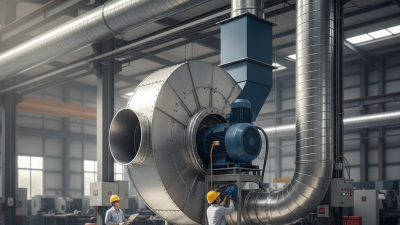
Key Technologies and Product Categories in Centrifugal Fan Manufacturing

Centrifugal fan manufacturing combines airflow science, motor control, precision fabrication, and application-based testing. In field inspections, I have found that impeller geometry often determines practical performance. Forward-curved blades support compact, low-pressure systems. Backward-curved designs usually deliver higher efficiency and stable operation. Radial-blade impellers handle dusty air more reliably. Single-inlet and double-inlet structures serve different airflow demands.

Key technologies include computational fluid dynamics, automated balancing, variable-frequency drives, and electronically commutated motors. CFD helps engineers identify turbulence around the inlet and blade tips. Dynamic balancing reduces vibration across the shaft. VFD control adjusts airflow without wasting energy through constant throttling. Smart sensors can monitor temperature, pressure, vibration, and motor load. These details matter in ventilation, filtration, process cooling, and commercial air-handling equipment.

Material selection also affects service life. Galvanized steel suits general indoor systems. Stainless steel performs better in humid or corrosive environments. Coated components may reduce surface damage, but coating quality must be verified. Noise testing deserves equal attention. A fan can meet its airflow target and still disturb workers nearby. Independent performance tests, traceable measurements, and documented quality controls help global buyers compare manufacturers fairly. Specifications can mislead. Real operating conditions may differ from laboratory results. Perfect selection is unrealistic, and even experienced engineers should review assumptions before approving a centrifugal fan.

10 Leading Centrifugal Fan Manufacturers and Their Core Strengths

The ten leading centrifugal fan manufacturers serve different operating demands. Heavy-duty producers focus on steel mills, cement plants, and continuous-duty systems. HVAC specialists prioritize quiet airflow, balanced impellers, and efficient motors. Cleanroom manufacturers emphasize low-particle surfaces and controlled assembly. High-temperature experts use heat-resistant alloys, insulation, and careful bearing placement. Corrosion-control suppliers select coatings for chemical and coastal environments.

Compact equipment manufacturers support OEM integration and limited installation space. Custom engineering firms adapt inlet sizes, pressure targets, and unusual duty cycles. Energy-focused producers improve impeller geometry, variable-speed control, and motor efficiency. Noise-control specialists combine acoustic enclosures with vibration testing. Global service providers add commissioning, spare parts, and regional technical support. These strengths matter more than a polished catalog.

Experienced buyers should request performance curves, test reports, material certificates, and maintenance guidance. Factory acceptance testing can reveal imbalance, leakage, or unexpected noise before shipment. Still, no supplier is perfect. Published efficiency may differ under dusty, humid, or unstable site conditions. I have seen small installation errors reduce airflow more than expected.

Tips: Compare the fan at your actual operating point, not only its maximum rating. Check service access, lead times, warranty terms, and replacement bearing availability. Ask how the manufacturer handles design changes. A reliable partner explains limitations clearly and records every adjustment.

How to Compare Quality, Efficiency, Compliance, and Global Support

When screening the 10 best centrifugal fan manufacturers, compare measured performance, not polished catalogs. Ask for test results under ISO 5801 or AMCA 210 conditions. Check airflow, pressure, sound, vibration, and efficiency at your actual duty point. One impressive peak value proves little. The U.S. Department of Energy’s fan-system sourcebook identifies 10–20% energy-saving opportunities through better system design and operation. The IEA’s Motor-Driven Systems report estimates that motor-driven equipment consumes about 40% of global electricity. Small losses become expensive quickly.

Quality also appears in details that buyers often overlook. Inspect impeller balance records, coating thickness, bearing life, inspection procedures, and factory acceptance tests. Request efficiency curves for variable-speed operation, not only full-speed results. Verify whether quoted performance includes filters, dampers, altitude, temperature, and air density. These conditions can change selection results. I still distrust any supplier that offers perfect numbers without tolerances. Real equipment is less tidy.

Compliance should include documented materials, electrical protection, noise data, and market-specific conformity records. Confirm that drawings, manuals, spare-part lists, and certificates use consistent model numbers. Global support needs measurable commitments: response time, local technicians, replacement-part availability, and remote troubleshooting. The World Bank’s Logistics Performance Index 2023 shows that shipment reliability remains uneven across markets. Build contingency stock for critical bearings and controls. A low purchase price can become a costly delay.

Choosing the Right Centrifugal Fan Manufacturer for Your Application

Choosing the right centrifugal fan manufacturer requires more than comparing catalog prices. The right partner must understand airflow, pressure, temperature, noise, and installation limits. Ask for selection data based on your actual duty point, not a generic performance curve. Small details matter. A fan running near its limit may consume more power and suffer earlier wear. Experienced manufacturers explain these trade-offs clearly. Their engineers should also discuss dust, moisture, corrosive gases, and operating cycles.

Review how the manufacturer validates performance before shipment. Look for documented testing, calibrated instruments, vibration checks, and traceable inspection records. Request material specifications for the impeller, housing, shaft, and protective coatings. A reliable supplier can provide drawings, tolerances, maintenance guidance, and spare-part information. Field experience is valuable here. Ask for references from applications with similar airflow and pressure demands. Still, references alone are not proof. Poor installation can distort results.

Communication after purchase often separates a capable manufacturer from a merely available seller. Confirm response times, warranty terms, commissioning support, and procedures for handling defects. Discuss lead times honestly, including custom fabrication and replacement components. The cheapest quotation can become expensive when the fan arrives incorrectly sized. I have seen this happen. A careful buyer should challenge assumptions, review the duty point, and allow room for future capacity changes. No selection is perfect. The best decision balances verified performance, service access, safety, and total operating cost.

Choosing the Right Centrifugal Fan Manufacturer for Your Application

Fan speed has a direct effect on performance: airflow changes in proportion to speed, pressure changes with the square of speed, and power changes with the cube of speed. These engineering relationships help global buyers compare application suitability, efficiency, control capability, and motor sizing when evaluating centrifugal fan manufacturers.

Values are normalized to 100% at 1,000 rpm and are calculated using standard centrifugal fan affinity laws for geometrically similar fans operating under comparable conditions.