What is a Centrifugal Ventilation Fan and How Does It Work?
Centrifugal Ventilation Fans play a critical role in maintaining air quality and circulation in various environments. According to John Smith, an industry expert with over 20 years of experience, "Centrifugal fans are essential for effective ventilation solutions." This statement encapsulates the importance of these fans in both industrial and residential settings.
Centrifugal Ventilation Fans operate by drawing air into the center of the fan and then spinning it outward. This process creates pressure, allowing the fan to move air efficiently. Their design and operation methods significantly influence their performance and energy efficiency. Often, accuracy in installation and maintenance is overlooked, which can lead to inefficiencies.
Choosing the right Centrifugal Ventilation Fan is crucial. Different sizes and power ratings serve various applications. It’s essential to analyze airflow needs and system requirements carefully. A well-selected fan improves air quality but requires ongoing attention. Understandably, some complexities remain in this field as technology evolves.
Definition of a Centrifugal Ventilation Fan
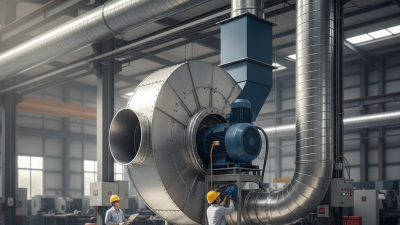
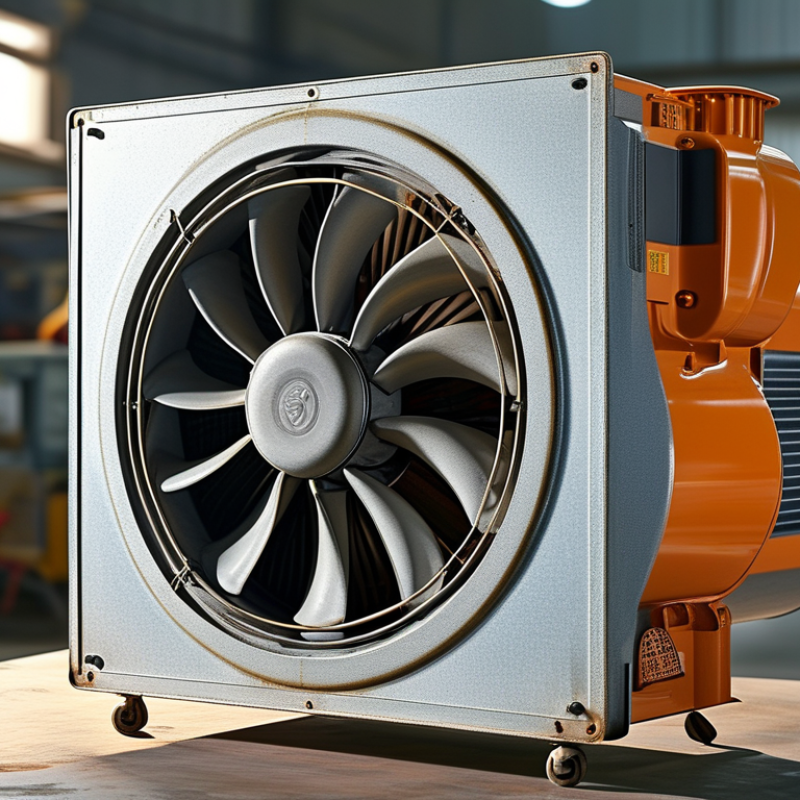
A centrifugal ventilation fan is a device designed to move air or other gases through a system. It operates based on the principle of centrifugal force. When the fan blades rotate, they draw air into the center and push it outward. This movement creates a significant pressure increase, allowing air to travel through ducts and spaces efficiently. According to a report from the American Society of Heating, Refrigerating and Air-Conditioning Engineers (ASHRAE), centrifugal fans are crucial in various applications, including industrial settings and HVAC systems.
These fans can generate higher static pressure than other fan types. This capability makes them ideal for ventilating large areas. The efficiency of a centrifugal fan can vary significantly based on design and size. For instance, a well-optimized fan can achieve an efficiency rating of about 80%. This rating is crucial for energy management in commercial buildings, as inefficient models can lead to higher energy costs.
Tip: Regular maintenance of centrifugal fans is essential for optimal performance. Check for dust buildup and ensure that the blades are clean.
Ventilation systems can also become a point of reflection. Many businesses neglect the importance of airflow quality. Poor ventilation practices can lead to harmful consequences, such as increased indoor pollutants. Moreover, retrofitting older systems often means dealing with compatibility issues. Balancing efficiency with effective air quality should be a priority.
What is a Centrifugal Ventilation Fan and How Does It Work?
| Dimension |
Description |
| Type |
Centrifugal |
| Application |
Industrial and commercial ventilation |
| Operating Principle |
Uses centrifugal force to move air |
| Airflow Direction |
Radial |
| Efficiency |
High efficiency at varying flow rates |
| Maintenance |
Regular maintenance required for optimal performance |
| Common Uses |
Dust and fume extraction, HVAC systems |
| Noise Level |
Generally lower noise levels compared to axial fans |
Working Principle of Centrifugal Ventilation Fans
Centrifugal ventilation fans are essential in many industrial applications. Their design allows for the efficient movement of air or gas. These fans operate based on a simple principle: they utilize rotational energy to create airflow. The fan's blades are shaped to push air outward, generating high velocity.
Inside the fan, a motor spins the blades, converting electric energy into kinetic energy. As the blades rotate, they create a low-pressure zone behind them. This pressure difference pulls air into the fan. The air is then expelled at a right angle to the intake. The efficiency of this mechanism depends on the fan's design and speed.
Despite their effectiveness, centrifugal fans can have limitations. The noise levels may increase with higher speeds, which can be problematic in some environments. Maintenance is critical as dust accumulation can reduce efficiency. Understanding these factors can help improve system performance and durability.
Key Components of Centrifugal Ventilation Fans
Centrifugal ventilation fans play a crucial role in various industries. These fans are designed to move air or gases using a rotational mechanism.
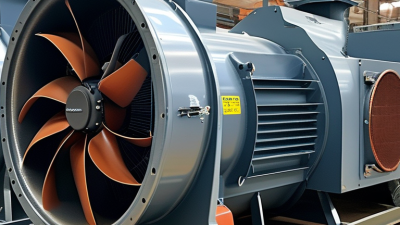
The key components of these fans include impellers, housings, and motors. The impeller creates airflow by converting rotational energy into kinetic energy. This process is essential for maintaining air quality in HVAC systems.
The housing of a centrifugal fan is typically spiral or volute-shaped. It directs airflow efficiently from the impeller to the exhaust. The motor drives the impeller, which is often driven by belts or directly connected. This setup allows for precise speed control, affecting airflow and pressure levels.
Tips: Regular maintenance of fan components can enhance performance and lifespan. Check for debris accumulation, as this can affect airflow efficiency. Consider vibrations during operation; these can indicate misalignment or wear.
Research shows that effective ventilation can improve worker productivity by up to 15%. However, improper installation can lead to inefficiencies. Suboptimal fan sizing results in higher energy consumption and increased noise levels, posing challenges for workplace environments. It's advisable to conduct regular performance assessments to ensure optimal functionality.
Applications in Various Industries
Centrifugal ventilation fans are widely used across various industries. Their design allows them to move large volumes of air. They are essential in settings requiring effective air circulation and ventilation. In manufacturing, proper air flow can significantly improve worker safety and productivity. According to the Global Ventilation Market Report, the demand for effective ventilation solutions is expected to grow at a rate of 5.4% annually.
In the agriculture sector, these fans support climate control in greenhouses. They regulate temperature and humidity levels, ensuring optimal growth conditions. Research shows that implementing effective ventilation can increase crop yields by up to 20%. However, not all systems are flawless; improper installation can lead to inefficient airflow and energy waste.
In the healthcare industry, centrifugal fans help maintain sterile environments. They assist in controlling airborne particles and pathogens. Data indicates that improving air quality can reduce infection rates by 30% in hospitals. Nevertheless, selecting the right fan for specific applications requires careful consideration of airflow, pressure, and noise level. Decisions made without thorough evaluation might not meet safety standards.
Advantages of Using Centrifugal Ventilation Fans
Centrifugal ventilation fans are widely used in various industries. Their primary advantage is efficiency. These fans are designed to move air or gas through a system using centrifugal force. They operate at high speeds, generating increased pressure. This makes them ideal for applications that require a strong airflow.
Using centrifugal fans can provide excellent airflow management. They are effective in removing stale air and maintaining indoor air quality. In many cases, these fans can adapt to different system designs. Their flexibility allows them to be integrated into various setups smoothly. This adaptability can lead to significant energy savings in the long run.
However, there are challenges. Noise pollution can be a concern with centrifugal fans. Proper placement and sound-dampening materials may be necessary. Additionally, their maintenance requires attention. Regular checks ensure optimal performance and longevity. By addressing these aspects, users can maximize the advantages of centrifugal ventilation fans.