Choosing a reliable China Hammer Crusher supplier requires more than comparing prices on a website. It requires evidence from the factory, field performance, and after-sales records. According to the U.S. Geological Survey’s Mineral Commodity Summaries 2024, global cement production reached approximately 4.1 billion metric tons in 2023. This scale reflects continuing demand for dependable crushing equipment in cement, mining, aggregates, and recycling operations.
The right supplier should explain capacity, feed size, discharge range, rotor speed, motor power, and expected wear-part life. Ask for a complete technical proposal, not a sales slogan. A practical review should include factory inspection, material certificates, assembly photographs, load-test records, and customer references from similar applications. ISO 9001 certification can support process consistency, but certification alone does not guarantee strong machine performance. It must match real production evidence.
Energy use also deserves attention. The International Energy Agency identifies energy efficiency and process improvement as important priorities for reducing industrial emissions. Therefore, compare output per kilowatt-hour, maintenance access, and downtime risks. A cheaper Hammer Crusher may become expensive when hammers, liners, bearings, or delivery delays are ignored.
Look closely at the details. Are spare parts standardized? Can the supplier provide remote troubleshooting within one working day? Does the warranty clearly define responsibilities? Small gaps matter. A polished brochure is not proof. Even experienced buyers can overvalue a low initial quote. The better decision combines engineering verification, transparent communication, and realistic total-cost analysis. Supplier selection is not perfect science, but careful questions reduce avoidable mistakes.
Choosing a top China hammer crusher supplier starts with your production target, not a catalog photograph. Define feed material, maximum lump size, moisture, abrasiveness, and required output before contacting manufacturers. Limestone at 80 millimeters needs a different setup from wet, sticky clay. Record hourly capacity, product size distribution, and daily operating hours.
A practical specification sheet should include motor power, rotor speed, discharge opening, wear-part life, and dust-control conditions. Ask for test data using material similar to yours. Request drawings showing foundation loads, maintenance access, and spare-part dimensions.
Small details matter. During a quarry review, I would compare feed samples with the proposed chamber size. Optimistic capacity figures can hide poor reduction performance. Numbers can mislead.
Check whether the supplier explains when to replace hammers, liners, and grate sections.
Production goals may change after installation. Leave adjustment room, but do not oversize the machine without evidence. Excessive power can increase operating costs and reduce process control. Ask for inspection procedures, material certificates, commissioning support, and clear acceptance criteria.
Video demonstrations help, yet they cannot replace a witnessed test. I would also contact comparable users and ask about downtime, response speed, and parts availability. No supplier is perfect. A reliable choice is one that discusses limitations openly.
How to Choose a Top China Hammer Crusher Supplier?
Choosing a top China hammer crusher supplier requires more than comparing online prices. Experience should be visible in completed projects, not only years listed on a website. Ask for references from quarries with similar feed size, moisture, and expected capacity. Request operating data, maintenance records, and photographs of installed machines. Real details reveal practical knowledge. A supplier that explains failures honestly may be more reliable than one promising perfect performance.
Certifications deserve careful checking. Confirm the certificate number, issuing body, scope, and validity date. Quality systems such as ISO 9001 can indicate controlled procedures, but they do not guarantee crusher performance. Ask whether welding inspection, material testing, and final assembly are documented. Check whether key components have traceable inspection reports. Do not accept scanned certificates without verification. Small gaps matter.
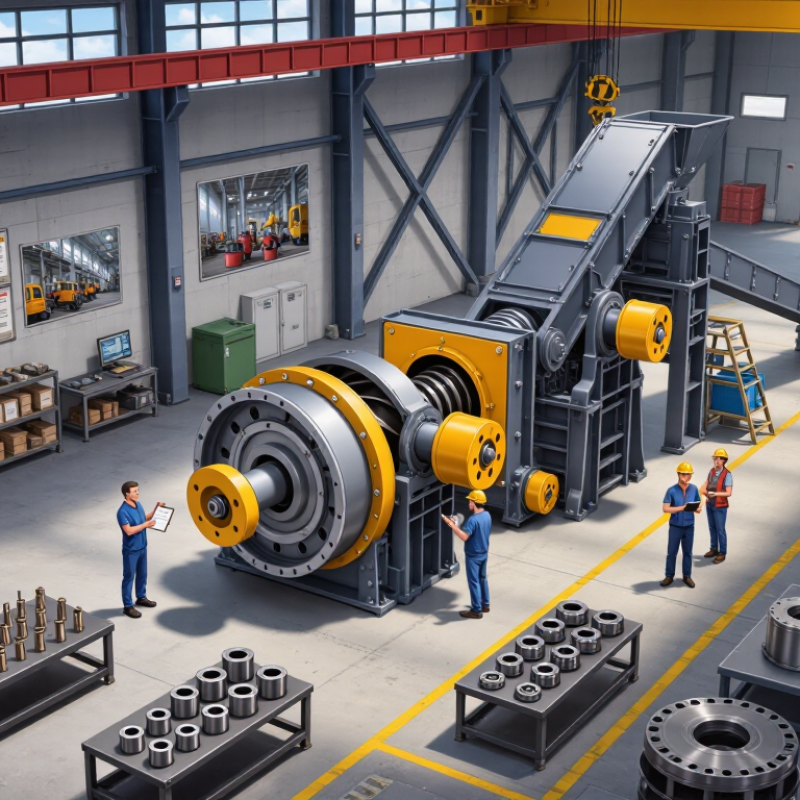
Manufacturing capability can be tested during a factory audit or live video inspection. Look for fabrication areas, CNC equipment, heat-treatment access, assembly bays, and load-testing procedures. Ask how rotor balance, hammer hardness, and discharge settings are checked before shipment. A capable supplier should provide drawings, spare-parts lists, installation guidance, and responsive after-sales support. Production capacity also matters during urgent replacement orders. I would still avoid judging a factory by size alone. A large workshop can hide weak process control. The best evidence is consistent documentation, clear communication, and machines operating under conditions close to yours.
| Evaluation Dimension | What to Verify | Recommended Evidence | Practical Evaluation Benchmark | Priority |
|---|---|---|---|---|
| Industry Experience | Experience designing, manufacturing, installing, and servicing hammer crushers for the required application. | Company registration information, dated product records, project references, factory audit documents, and technical personnel profiles. | Give higher scores to suppliers that can provide verifiable records for similar feed materials, output sizes, capacity ranges, and operating environments. | High |
| Product Application Match | Compatibility with the feed material, maximum feed size, moisture content, abrasiveness, required product size, and reduction ratio. | Technical data sheet, process flow diagram, material analysis, application questionnaire, and signed selection calculations. | The proposed model should be selected from documented operating conditions rather than from capacity alone. Capacity must be stated together with feed size, product size, material density, and moisture. | High |
| Quality Management System | Whether production and quality controls are organized under a documented management system. | A valid ISO 9001:2015 certificate issued by an accredited certification body, certificate scope, expiry date, and audit status. | Confirm that the certificate scope covers the manufacture or relevant processing of crushing equipment. A certificate alone should not replace a product inspection. | High |
| Export and Conformity Documentation | Ability to provide documentation required for the destination market and intended use. | Declaration of conformity where applicable, risk assessment, user manual, installation instructions, wiring documentation, inspection records, and packing list. | For equipment placed on regulated markets, request the conformity documents required by the applicable legislation at the time of delivery. Verify that model numbers and technical specifications are consistent across all documents. | High |
| Foundry and Wear-Part Capability | Control over hammer heads, liners, grates, impact plates, rotor components, and other wear parts. | Material specifications, heat-treatment records, hardness test reports, chemical composition reports, casting inspection records, and replacement-part drawings. | The supplier should identify the wear-part material grade, heat-treatment method, applicable acceptance criteria, and expected replacement procedure. Do not accept wear-life claims without defined operating conditions. | High |
| Machining and Fabrication | Accuracy and consistency of machining for shafts, rotor assemblies, housings, bearing seats, and mounting surfaces. | Inspection and test plans, dimensional inspection reports, calibrated measuring-equipment records, welding procedure documents, and non-destructive testing reports where required. | Critical dimensions, shaft runout, bearing-seat tolerances, weld quality, and assembly clearances should be inspected against approved drawings before shipment. | High |
| Rotor Balance and Mechanical Safety | Dynamic balance, structural integrity, guarding, access protection, and safe maintenance design. | Dynamic balancing report, rotor inspection record, material certificates, guard drawings, emergency-stop requirements, and maintenance instructions. | Ask for a balancing report that identifies the rotor, balancing speed, residual unbalance, and acceptance criteria. ISO 21940-11 may be used as a reference for balancing-tolerance evaluation. | High |
| Factory Testing and Inspection | Whether the completed machine is inspected and tested before dispatch. | Factory acceptance test procedure, inspection checklist, no-load test record, vibration readings, bearing-temperature readings, motor data, and signed release report. | The purchase contract should define inspection points, test duration, permitted vibration and temperature limits, documentation format, and the consequences of non-conformity. | High |
| Capacity and Energy Data | Actual throughput, motor power, product gradation, and energy requirements under stated operating conditions. | Performance curves, calculation sheets, test results, motor nameplate data, and a clearly defined test material and feed condition. | Compare suppliers only when the feed size, material characteristics, moisture, product size, screen arrangement, and operating speed are equivalent. Avoid comparing capacity figures with different test conditions. | High |
| Spare Parts Availability | Availability and identification of hammers, liners, grates, bearings, belts, fasteners, and other service parts. | Spare-parts list, exploded drawings, part numbers, recommended stock levels, interchangeability information, and written lead-time commitments. | Critical wear and maintenance parts should be identifiable by drawing and part number. Define minimum stock, packaging requirements, and delivery lead times before placing the order. | High |
| Installation and Commissioning Support | Support for foundations, alignment, electrical connection, trial operation, and operator training. | Foundation drawings, installation manual, commissioning checklist, training plan, remote-support procedure, and service engineer qualifications. | The supplier should provide clear interface requirements for civil works, power supply, lubrication, feed arrangement, discharge equipment, and dust-control systems. | Medium |
| Warranty and After-Sales Service | Warranty coverage, response time, troubleshooting process, and responsibility for defects. | Signed warranty terms, service contact details, escalation procedure, defect-report form, and records of previous service cases. | The contract should define warranty duration, covered components, exclusions, response time, replacement-part responsibility, and remedies for repeated non-conformity. | High |
| Traceability and Documentation Control | Ability to trace materials, components, inspections, revisions, and final equipment identity. | Serial-number system, material certificates, welding records, inspection reports, drawing revision history, and final data book. | Major pressure-bearing or rotating components should be traceable to inspection records and approved drawings. The final documentation should match the delivered machine. | Medium |
| Commercial and Delivery Reliability | Clarity of quotation, manufacturing schedule, payment terms, packaging, shipping responsibility, and change-control process. | Detailed quotation, milestone schedule, production plan, packing specification, shipping documents, and written change-order procedure. | Require a model-specific quotation that separates the crusher, motor, accessories, spare parts, testing, documentation, packaging, and logistics costs. | Medium |
| Total Cost of Ownership | Purchase price plus installation, power consumption, wear-part consumption, maintenance, downtime, and service costs. | Five-year cost estimate, recommended maintenance schedule, wear-part prices, power assumptions, and documented operating data. | Select the supplier with the strongest verified lifecycle value, not necessarily the lowest initial quotation. Use the same production target and operating hours when comparing alternatives. | Medium |
| Supplier Audit and Final Verification | Whether the supplier permits independent review before shipment. | Factory-audit checklist, pre-shipment inspection plan, video or on-site inspection arrangements, and non-conformance correction records. | Use a documented approval process: technical review, contract review, production inspection, factory acceptance test, document review, and pre-shipment release. | High |

How to Choose a Top China Hammer Crusher Supplier?
Choosing a China-based hammer crusher supplier starts with the machine, not the brochure. The USGS Mineral Commodity Summaries 2024 estimated U.S. crushed-stone output at 1.9 billion metric tons in 2023. Small efficiency gaps can scale quickly. Request a process flow sheet. Check feed size, moisture, abrasiveness, required product curve, and rated capacity. A claimed 300 tonnes per hour means little without test material and discharge settings. In my plant visits, blocked screens often exposed weak process matching, not weak motors. That distinction matters.
Inspect rotor balance, hammer fixing, liner thickness, bearing sealing, and access around wear parts. Ask whether replacement hammers use documented chemistry and heat treatment. Hardness alone is not enough. Brittle parts can fail violently. Require material certificates, dimensional records, and a sample wear report from comparable stone. Compare measured kWh per tonne, output-size distribution, and continuous-run availability. Test under your own feed conditions. Laboratory results may flatter reality.
Safety deserves engineering evidence. ISO 12100 risk-assessment principles and ISO 13849-1 control-system guidance provide useful checkpoints. Look for fixed guards, interlocked inspection doors, emergency-stop cables, lockout points, dust control, and safe lifting provisions. MSHA recorded 40 U.S. mining fatalities in 2023, according to its annual fatality data. Safeguards cannot be decorative. Request guarding drawings, functional-test records, manuals, and operator training materials. Also verify spare-parts lead times, warranty exclusions, and independent acceptance testing. A low quotation can hide expensive downtime. Review the uncomfortable details.
Price is only the first screen. Compare the complete landed cost, including steel specifications, wear parts, export packing, freight, insurance, and commissioning. UNCTAD’s Review of Maritime Transport 2023 shows how sharply container freight costs changed after recent disruptions. Therefore, request a quotation validity period and at least two shipping options. Lead time also needs detail. Ask for dates covering drawing approval, production, factory testing, port delivery, and installation. A promised “30-day delivery” may exclude critical approvals and spare parts.
Installation quality can decide whether a crusher performs smoothly or creates repeated downtime. Request foundation drawings, rotor balance records, motor data, and a commissioning checklist. The World Bank’s Logistics Performance Index 2023 evaluates timeliness, tracking, and logistics competence. Use these same ideas when checking supplier communication. After-sales support should include response times, remote troubleshooting, local technician availability, and guaranteed spare-part dispatch. Ask for references from plants with similar feed size and capacity. Site conditions differ.
Tips: Build a comparison sheet with five columns: price, lead time, installation scope, warranty, and support response. Require written exclusions. Check whether quoted output uses laboratory material or real quarry feed. A cheaper machine can become expensive after one neglected bearing. I have seen buyers overvalue discounts and undervalue training. That judgment is understandable, but incomplete. One practical test helps: send three technical questions and measure the supplier’s accuracy, speed, and willingness to admit uncertainty.
How to Choose a Top China Hammer Crusher Supplier?
Factory auditing should move beyond polished showrooms and production photos. A reliable audit examines casting areas, machining lines, assembly stations, and spare-parts storage. Check whether serial numbers follow components from incoming steel to final inspection. Ask to review maintenance logs, calibration records, and nonconformity reports. These small records often reveal more than a sales presentation.
The USGS Mineral Commodity Summaries 2024 reports about 1.5 billion metric tons of crushed stone production in the United States during 2023. Such volume places constant pressure on crusher uptime and replacement parts. Therefore, inspect rotor balancing, hammer material certificates, wear testing, and final vibration checks. Request recent test reports, not generic templates. A factory may pass an audit and still lack process discipline. I would not overlook that weakness.
Customer references should cover projects similar to yours, including feed size, hardness, capacity, and operating climate. Speak directly with at least two users. Ask about actual output, delivery accuracy, breakdown frequency, and response time for claims. The World Bank Logistics Performance Index 2023 used 4,090 evaluations across 139 countries, highlighting reliability, tracking, and timeliness as core logistics measures. Apply the same logic to supplier references. Confirm whether promised spare parts arrived on schedule. One cheerful reference is not evidence. Three detailed conversations are better.
Use a structured assessment that combines factory-audit evidence with verified customer references. The weighting below is a practical procurement framework, not a ranking of any company or brand.
How to use it: Prioritize on-site verification of production capability, quality controls, traceability, and testing facilities. Then confirm delivery performance, equipment reliability, and after-sales support through independent customer references.