How to Choose the Right Centrifugal Exhaust Fan?
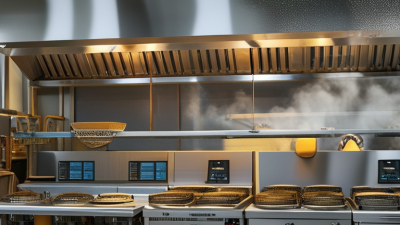
Choosing the right Centrifugal Exhaust Fan begins with the air, not the catalog. What must be removed? Kitchen grease, welding smoke, humid air, chemical vapor, or ordinary heat? Each condition changes the fan’s materials, motor protection, airflow, and maintenance needs.
Robert H. Diehl, author of Fan Engineering, wrote, “A fan is a machine for moving air.” The sentence sounds simple. It is not. A fan must move air through resistance. Long ducts, elbows, filters, dampers, and roof outlets create static pressure. Selecting only by cubic feet per minute can produce weak extraction, excessive noise, or motor overload.
Begin with the required airflow and total system resistance. Then compare the fan curve with the operating point. Check wheel speed, efficiency, sound levels, motor service factor, and control compatibility. For corrosive applications, consider coated steel, stainless steel, or another suitable material. For greasy exhaust, provide accessible cleaning points and follow the equipment manufacturer’s instructions.
The installation environment matters too. A fan mounted near a hot process may need higher temperature capability. A roof fan may require weather protection and safe access for inspection. A variable-frequency drive can improve control, but it cannot correct an incorrectly sized system.
Field experience shows that many failures begin with incomplete information. The duct route changes. The filter loads early. The actual pressure exceeds the estimate. No selection is perfect.
That is why reliable choices use measured data, recognized testing methods, and review by a qualified ventilation professional. A careful decision balances performance, safety, energy use, noise, and long-term service. The cheapest fan may become the most expensive part of the building.
Define the Duty Point: Required Airflow, Static Pressure, and Operating Conditions
A centrifugal exhaust fan should be selected around its duty point, not just its catalog airflow. The duty point pairs the required airflow with the static pressure the fan must overcome. Measure or estimate both for the actual system. A fan rated for 2,000 cubic feet per minute may deliver much less when connected to long ducts, tight bends, filters, or restrictive grilles.
List the equipment and conditions that affect resistance. Note duct length and diameter, elbows, dampers, filters, and the exhaust outlet. Include expected filter loading if the system uses one. Small details matter. A partly closed damper can shift the operating point and reduce ventilation. If measurements are available, use them; otherwise, document your assumptions and ask a qualified ventilation professional to review them. Estimates are useful, but they are still estimates.
Operating conditions also shape the choice. Record air temperature, humidity, dust levels, and any corrosive or sticky contaminants. These can influence fan materials, motor placement, and maintenance needs. Check whether the system must run continuously or only during certain processes, and consider available electrical supply and space. Then compare the fan curve with the required airflow and pressure at the intended speed. The intersection should sit within the fan’s stable operating range, not near an unstable edge. In practice, the first calculation is rarely perfect. Recheck the numbers after installation, because real ducts and fittings often differ from the drawing.
Match Impeller Design to Dust Load, Temperature, and Exhaust Type
How to Choose the Right Centrifugal Exhaust Fan?
Match Impeller Design to Dust Load, Temperature, and Exhaust Type
Dust load should guide impeller selection. For heavy, coarse particles, a radial-blade impeller often handles material better than a tightly curved design. Its open passages can reduce clogging, though abrasive dust may wear the blades quickly. Fine, relatively clean air may suit backward-inclined blades, which can operate efficiently when particles are limited. Check the actual dust, not just its name: a handful of fibrous lint can behave differently from dry mineral powder.
Temperature matters just as much. Hot exhaust can affect blade strength, shaft alignment, bearings, and nearby seals. Choose a fan rated for the measured operating temperature, including brief peaks during startup or process changes. In some installations, keeping bearings outside the hot airstream helps; the right arrangement depends on the fan design. Moist or corrosive exhaust may also require suitable materials and drainage. Small details count.
Match the impeller to the exhaust itself. Sticky vapors can coat blades and upset balance, while sparks or hot particles call for careful system review and appropriate protective measures. Confirm airflow, static pressure, particle size, and cleaning access before choosing. A fan that moves air well in a clean test may struggle after dust builds up. I have seen selection reduced to airflow alone; that is an easy shortcut, but not a reliable one.
How to Choose the Right Centrifugal Exhaust Fan? — Match Impeller Design to Dust Load, Temperature, and Exhaust Type
| Impeller Design |
Dust and Particle Load |
Typical Temperature Suitability |
Suitable Exhaust Applications |
Key Selection Considerations |
| Radial-blade, open paddle |
Best suited to heavy, coarse, or abrasive dust and material-laden air. Open passages are less prone to clogging than narrow-blade designs. |
Can be configured for hot gas when the fan, bearings, seals, and materials are specified for the actual operating temperature. |
Dust collection, woodworking waste, grain handling, and process exhaust containing larger particles. |
Typically requires more power and can be less efficient than cleaner-air designs. Confirm particle size, abrasiveness, and erosion protection. |
| Radial-tip |
Handles moderate dust loading and some particulate matter; generally less clog-prone than airfoil or backward-curved designs. |
Available in high-temperature configurations, subject to fan construction and temperature-rated components. |
Industrial process exhaust, dust collection systems, and applications where a balance of pressure capability and particle handling is needed. |
Consider abrasion, buildup, and cleaning access. Performance depends on system resistance and the selected fan duty point. |
| Backward-inclined or backward-curved |
Best for clean or lightly contaminated air; not generally preferred for sticky, fibrous, or heavy dust that can accumulate on the blades. |
Temperature capability varies by construction. High-temperature service requires suitable materials, clearances, and bearing arrangements. |
General ventilation, clean process exhaust, and systems where energy efficiency is important. |
Often offers good efficiency and non-overloading power characteristics, but verify the operating point and keep the impeller free of deposits. |
| Airfoil |
Clean-air service only; blade passages are vulnerable to dust buildup and imbalance. |
Usually selected for ordinary ventilation temperatures rather than hot, particle-laden process exhaust. |
Clean ventilation and recirculation systems with low particulate content. |
Can provide high efficiency and low noise in suitable systems. Avoid where dust, moisture, or deposits may collect on the blades. |
| Forward-curved |
Best for clean, relatively low-pressure air; not a good choice for heavy dust, abrasive particles, or material transport. |
Generally used for ordinary ventilation conditions; specialized high-temperature designs must be confirmed with the manufacturer. |
Compact HVAC and clean-air exhaust applications with moderate airflow and relatively low system resistance. |
Compact and capable of high airflow at low speed, but can be sensitive to dirt buildup and may draw increasing power as airflow rises. |
Selection note: Temperature limits are design-specific, not determined by impeller shape alone. Confirm the gas temperature, dust characteristics, required airflow and static pressure, material compatibility, bearing location, and applicable safety requirements with the fan supplier.
Apply Fan Laws: Flow ∝ RPM, Pressure ∝ RPM², Power ∝ RPM³
A centrifugal exhaust fan should be selected for the airflow and pressure your system actually needs, not simply the highest rated capacity.
Fan laws help predict what happens when speed changes:
flow is proportional to RPM,
pressure to RPM squared,
and power to RPM cubed.
In practical terms, raising speed by 10% increases airflow by roughly 10%, pressure by about 21%, and power demand by around 33%. That last number matters. A small speed increase can push a motor closer to its limits.
Check the fan curve, duct resistance, and motor rating before adjusting RPM. For example, a fan moving air through a long duct with several elbows may deliver less flow than its free-air rating suggests. Measure the operating point if possible, using a suitable airflow instrument and pressure readings.
Keep an eye on vibration and noise, too. The math is useful, but real systems are messy. I have seen a calculated speed change look reasonable on paper and still produce unexpected noise at a damper. Allow for uncertainty, verify the result under operating conditions, and avoid assuming the cubic power relationship guarantees an exact field measurement.
Check Certified Performance Using AMCA 210 Test Ratings
How to Choose the Right Centrifugal Exhaust Fan?
Check Certified Performance Using AMCA 210 Test Ratings
A fan’s advertised capacity matters only when its test conditions match your project. AMCA 210 establishes laboratory methods for measuring airflow, pressure, power, and fan efficiency. Check the certified performance report for these values at the selected operating point—not just the maximum airflow printed in a catalog. A fan rated at 5,000 cubic feet per minute may deliver less once duct resistance, elbows, and filters are included.
Compare airflow and pressure together. AMCA 210 test data show how a fan performs across a range of operating conditions, helping engineers match the unit to the system curve. Review the reported power, too: two fans can move similar air volumes while drawing different amounts of energy. Testing is controlled, however. Installation details and site conditions can change real-world performance; this difference is easy to underestimate.
Tips: Ask for the AMCA 210 performance report, then verify airflow, pressure, and power at your design point. Check that the tested fan configuration matches the specified model and accessories. Keep a little room for uncertainty. A neat spreadsheet cannot fix a poorly measured duct system.
Compare Efficiency, Noise, Materials, and Maintenance Requirements
Choosing a centrifugal exhaust fan starts with the air it must move and the resistance in the ductwork. A fan that looks powerful on paper may perform poorly with long ducts, tight bends, or dirty filters. Check its performance curve at your required airflow and pressure, not just its maximum airflow rating. Efficiency matters over time. A slightly larger, well-matched fan may use less energy than a smaller unit forced to run near its limit.
Listen to the fan in its actual setting, if possible. A steady low hum is usually easier to live with than a sharp, high-pitched whine. Ask for sound data at the operating point, and consider vibration, mounting, and distance from occupied rooms. Noise figures can be misleading when installation details are ignored. I have seen that overlooked.
Material choice depends on what the exhaust carries. Galvanized steel suits many ordinary indoor applications, while stainless steel can better resist moisture or corrosive fumes. Confirm that the housing and impeller suit the temperature and air composition. Do not assume “heavy-duty” means suitable for every environment.
Maintenance should be practical, not merely promised. Look for accessible inspection panels, removable components, and clear lubrication guidance. Check belts, bearings, deposits, and fasteners on a schedule suited to operating hours. A fan that is difficult to clean may lose performance quietly. Even a sensible choice can be wrong if site conditions change.