Leave Your Message
Choosing a Roll Crusher in 2026 is not a popularity contest. It is a material-matching decision.
A quarry manager may compare smooth-roll, toothed-roll, double-roll, and high-pressure grinding-roll designs. Each type handles pressure differently. Each creates a different product shape, capacity, and maintenance burden. Moist clay may plug a smooth crusher. Hard, dry limestone may reward a toothed design. Sticky feed can turn a promising specification sheet into an expensive lesson.
Professor Barry A. Wills, a respected mineral-processing authority, has emphasized that crushing should prepare material for the next treatment stage. That principle still matters. A Roll Crusher should fit the complete circuit, not operate as an isolated machine. Check feed size, compressive strength, moisture, abrasiveness, target product size, and required throughput. Ask how quickly worn teeth, shafts, and bearings can be replaced. Small details become large costs.
Look beyond the brochure.
Double-roll crushers often provide controlled reduction and predictable operation. Toothed models can grip larger lumps more effectively. Smooth rolls may suit certain brittle materials and finer reduction duties. High-pressure grinding rolls can improve energy efficiency, but they demand careful feed control and suitable downstream equipment.
No design wins everywhere. That is the uncomfortable truth.
A buyer can still make a poor choice after consulting experienced engineers. Laboratory testing may reveal unexpected fines, slippage, or material buildup. Real operating conditions are rarely perfect. This guide compares the leading Roll Crusher types, their practical strengths, and their limitations, helping you choose with evidence rather than machinery fashion.
2026 Top Roll Crusher Types: Which One Should You Buy?
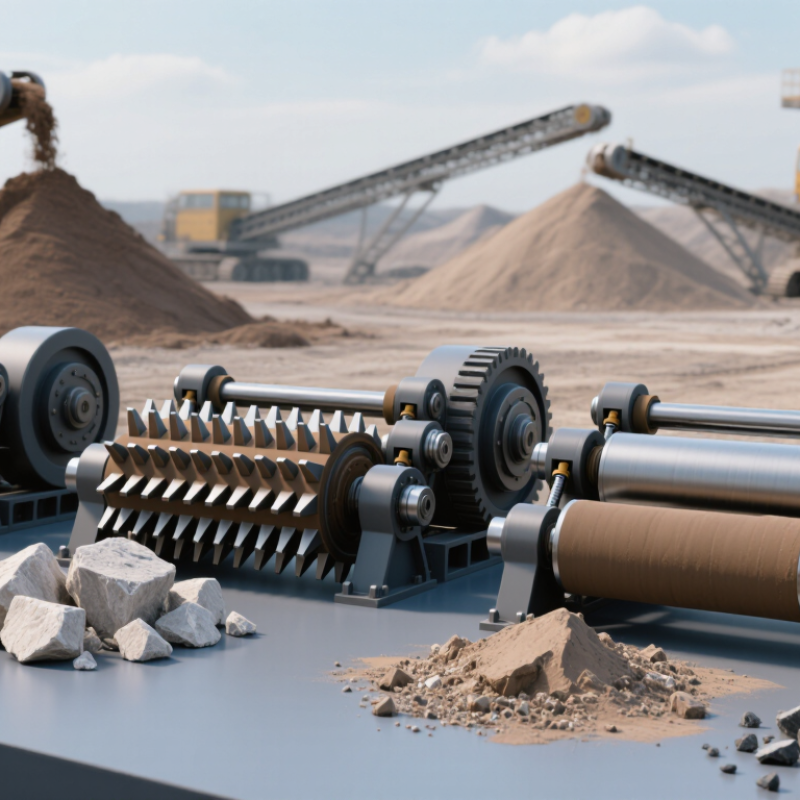
A roll crusher reduces rock between two rotating cylinders. The rolls pull feed into a narrow gap, compressing and shearing it into smaller pieces. Single-roll designs suit softer materials and controlled reduction. Double-roll crushers offer balanced crushing for coal, limestone, salt, and similar feed. Toothed rolls grip larger lumps, while smooth rolls create a more consistent product.
The choice depends on feed size, moisture, hardness, and target output. A 2024 USGS Mineral Commodity Summaries report estimated United States crushed-stone production at about 1.9 billion metric tons in 2023. That figure shows the scale of aggregate demand, but it does not prove every operation needs a roll crusher. Material testing still matters. High moisture can cause buildup. Very abrasive rock can increase roll wear. A smaller gap may improve sizing, yet it can also raise power demand. Real plants rarely perform perfectly.
Tips: Measure the feed before selecting a model. Check the gap adjustment range, roll diameter, motor load, and replacement schedule. Ask for test results using your actual material. Inspect the discharge conveyor, guards, and dust controls. A crusher that looks efficient on paper may struggle with sticky clay. Keep a maintenance log. It may reveal that poor feeding, not weak crushing, causes inconsistent output.
A roll crusher reduces material by compressing it between one or more rotating rolls. The comparison below summarizes commonly used roll crusher configurations and their typical operating characteristics.
| Crusher Type | How It Works | Typical Feed Size | Typical Product Size | Reduction Ratio | Best Applications | Key Advantages | Main Limitations |
|---|---|---|---|---|---|---|---|
| Single-Roll Crusher | One toothed or segmented roll compresses and shears material against a stationary breaker plate. | Up to approximately 1,000 mm, depending on design and material. | Approximately 50–250 mm. | About 4:1 to 6:1. | Run-of-mine coal, soft limestone, gypsum, clay, and other friable materials. | Simple layout, relatively low power demand, and good tolerance for occasional oversized feed. | Generally unsuitable for very hard, highly abrasive rock; product can be less uniform than with twin-roll designs. |
| Double-Roll Crusher | Two counter-rotating rolls draw material into a controlled gap and apply compression, shear, and limited tearing forces. | Up to approximately 300–500 mm. | Approximately 10–100 mm. | About 3:1 to 4:1. | Coal, salt, potash, soft shale, limestone, and other medium-soft materials. | Compact design, predictable product sizing, and relatively low generation of fines. | Performance decreases when feed is extremely hard, sticky, or highly abrasive; the roll gap requires proper adjustment. |
| Toothed Roll Crusher | Intermeshing or opposed teeth penetrate the feed, then break it by compression, shear, and ripping action. | Up to approximately 1,000 mm. | Approximately 50–250 mm. | About 4:1 to 6:1. | Run-of-mine coal, lignite, frozen materials, soft overburden, and moderately sticky feed. | Strong feed-grabbing action, effective on large lumps, and lower plugging risk than smooth rolls in many applications. | Tooth wear can be significant in abrasive feed; it is not normally selected for very hard competent rock. |
| Smooth-Roll Crusher | Two smooth rolls compress particles between their surfaces; the adjustable gap controls the final product size. | Usually up to approximately 100–150 mm. | Approximately 3–25 mm. | About 3:1 to 4:1. | Secondary or tertiary crushing of coal, limestone, coke, salt, and other relatively dry materials. | Produces a comparatively consistent product with limited fines and a clean, simple crushing action. | Can slip or plug with wet, clay-rich, or sticky feed; usually requires well-controlled feed sizing. |
| High-Pressure Grinding Rolls (HPGR) | Two counter-rotating rolls compress a packed bed of particles under high hydraulic pressure, causing interparticle breakage. | Typically up to approximately 65 mm, depending on the circuit. | Often approximately 1–10 mm, with a substantial amount of microcracking. | About 2:1 to 5:1 per pass. | Hard-rock and mineral-processing circuits, including ore grinding and energy-efficient tertiary crushing. | Lower specific energy than many conventional grinding circuits and microcracked product that can improve downstream liberation. | Higher capital and control complexity; wear surfaces and hydraulic systems require careful monitoring. |
| Four-Roll Crusher | Two stages of opposed rolls provide primary and secondary compression within one machine frame. | Up to approximately 300–500 mm. | Approximately 3–50 mm. | About 6:1 to 8:1 overall. | Coal preparation, coke processing, and applications requiring a narrower product-size distribution. | Combines two reduction stages, can deliver a more uniform product, and may reduce the number of separate machines. | More components and adjustment points increase maintenance requirements and initial equipment cost. |
| Mineral Sizer | Low-speed toothed rolls use a large torque force to pull material through a controlled opening and break it by compression and shear. | Up to approximately 1,500 mm or more in large mining applications. | Approximately 100–350 mm. | About 3:1 to 6:1. | Primary sizing of coal, overburden, soft rock, and sticky or wet materials in high-throughput mining systems. | Handles large feed, high moisture, and variable lump sizes while maintaining relatively low roll speed. | Usually provides sizing rather than fine crushing; tooth and shaft components need protection from tramp metal. |
Buying guidance: Choose a toothed roll or mineral sizer for large, soft, wet, or sticky feed; a smooth or double-roll crusher for controlled sizing of dry, friable material; and an HPGR when energy-efficient high-pressure grinding or downstream mineral liberation is the priority. Actual capacity and product size depend on material hardness, moisture, feed gradation, roll diameter, roll width, speed, and the selected gap.