How to Choose the Right Crusher Roller Sleeve for Your Needs
Choosing the right Crusher Roller Sleeve can protect your production schedule, product quality, and maintenance budget. The best option depends on more than price. Material hardness, feed size, moisture, operating speed, and expected service life all matter. A sleeve that performs well in one plant may wear quickly in another. Details count.
As an illustrative, fictional industry expert, maintenance engineer Daniel Reed puts it: “Match the sleeve to the material and operating conditions, not just the machine.” This is a proposed quote, not a verified statement from a real professional. Use it as a practical principle: check the crusher model, measure the sleeve dimensions, and review the material’s wear characteristics before comparing options. Ask suppliers for specifications and relevant performance data. If those details are missing, pause. That small step can prevent a costly mismatch.
This guide outlines how to assess sleeve materials, fit, durability, and supplier support. It also considers trade-offs that are easy to overlook, such as changing wear patterns across a roller’s surface. No selection method removes every uncertainty. Operating conditions change, and real-world results may differ from estimates. Use the recommendations as a starting point, then validate them against your equipment records and maintenance experience.
Understanding Crusher Roller Sleeve Functions and Types
How to Choose the Right Crusher Roller Sleeve for Your Needs
Understanding Crusher Roller Sleeve Functions and Types
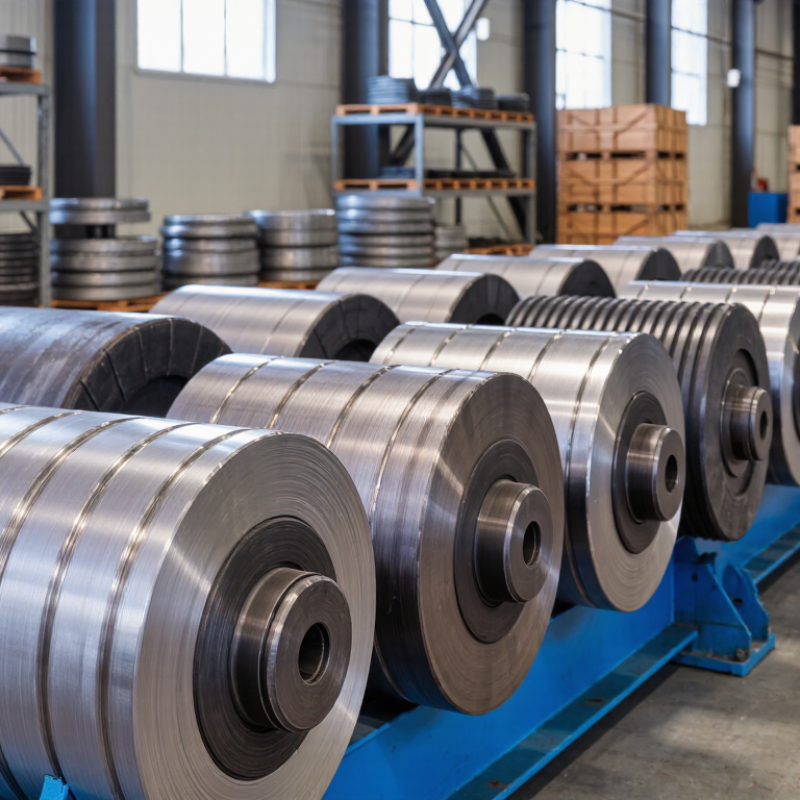
A crusher roller sleeve protects the roller core from repeated impact, abrasion, and heat. Its outer surface also helps grip and guide material through the crushing gap. The right sleeve can support steady output and reduce wear on the roller itself. That matters. But no sleeve lasts indefinitely, especially when feed contains hard, uneven pieces.
Sleeves vary by material and surface design. Alloy-steel options suit many demanding applications, while carbide-faced or hardfaced designs may resist severe abrasion. Smooth sleeves work with some fine or uniform feed. Toothed sleeves can grip larger, tougher pieces. Replaceable segmented sleeves allow damaged sections to be changed, while one-piece sleeves offer a continuous surface. Names and designs differ between suppliers, so check dimensions, mounting details, and operating limits rather than relying on labels alone. A higher-wear rating is not automatically the best choice; impact conditions matter too.
Tips: Match sleeve material and surface to the feed’s size, hardness, and moisture. Check wear patterns during routine inspections, especially near the edges. Record the gap and sleeve condition. It is easy to overlook uneven wear, and that can affect product size.
Assessing Material, Hardness, and Wear Resistance Requirements
Selecting a crusher roller sleeve starts with the feed, not the catalogue. The USGS Mineral Commodity Summaries 2024 reports about 1.5 billion metric tons of crushed stone produced in the United States during 2023. That scale shows why small wear-rate differences can become costly. Inspect the feed for quartz, moisture, clay, and tramp metal. Quartz-rich rock usually demands stronger abrasion resistance, while wet clay may require better anti-packing performance.
Hardness needs context. High-chrome white iron can offer strong abrasive wear resistance, but it may crack under impact. Tougher alloy steel or manganese-based materials can absorb impact better, often with faster surface wear. Use hardness as one measurement, not the decision. ASTM G65 dry-sand abrasion testing can compare material loss under controlled conditions, although it does not reproduce every crusher site. A sleeve rated near 600 HB may still fail early if feed segregation creates repeated impact.
Measure the worn sleeve profile, not only its final weight. Uneven grooves can indicate misalignment, poor feed distribution, or an unsuitable pattern. In practice, I would record operating hours, throughput, product size, and liner thickness at inspection. Data from three changeouts is more useful than one impressive laboratory result. The difficult part is admitting that our first material choice may be wrong. Field evidence should overrule habit. Keep a sample of the feed, too. It often explains failures that hardness charts cannot.
Matching Sleeve Dimensions to Your Crusher Model
Choosing the right crusher roller sleeve starts with accurate dimensions, not appearance. A sleeve may look suitable but still fail during installation. Match the sleeve’s bore diameter, outside diameter, and face width with your crusher model’s technical drawing. Check the shaft fit, keyway position, and retaining shoulder carefully. Even a small mismatch can create vibration, uneven wear, or dangerous movement.
Measure the removed sleeve only after cleaning it. Material buildup can distort your readings. Use a calibrated vernier caliper for width and an inside micrometer for the bore. For larger parts, record measurements at several points around the circumference. This reveals taper and oval wear. I once measured only one side of a worn sleeve. That shortcut failed. The replacement fitted tightly at one point and loosely at another.
Do not rely on model names alone. Production versions can have different shaft sizes, sleeve widths, or mounting details. Compare the equipment drawing with the actual roller assembly. Confirm the running clearance, material thickness, and expected crushing load with a qualified technician. Temperature also matters. Heat can expand the sleeve and change the fit during operation. Keep a written measurement record, including tool accuracy and measurement location. A second check is worthwhile. It may feel slow, but it prevents costly rework and unexpected downtime.
How to Choose the Right Crusher Roller Sleeve for Your Needs - Matching Sleeve Dimensions to Your Crusher Model
Use the representative ranges below for preliminary sizing only. Crusher models do not share universal sleeve dimensions; confirm every fit dimension against the machine drawing or by measuring the existing roll.
| Crusher Configuration |
Representative Roll Diameter |
Representative Face Width |
Indicative Sleeve Wall Thickness |
Bore and Mounting Interface |
Key Checks Before Ordering |
| Compact single-roll crusher |
300–500 mm |
300–600 mm |
25–60 mm |
Match the measured roll-body diameter and the specified retaining method. |
Check shaft alignment, end clearance, sleeve length, and whether the sleeve is one-piece or segmented. |
| Medium toothed double-roll crusher |
500–800 mm |
600–1,000 mm |
40–80 mm |
Confirm the core diameter, keyway or spline details, and axial locating features from the equipment drawing. |
Check tooth profile, tooth direction, roll gap, and clearance between the two rolls. |
| Heavy-duty double-roll crusher |
800–1,200 mm |
1,000–1,600 mm |
50–100 mm |
Verify the mounting interface and fit requirements for the specific roll assembly; do not infer them from outside diameter. |
Check sleeve weight, lifting access, segment joints, locking arrangement, and operating load. |
| Smooth-roll crusher |
400–900 mm |
400–1,200 mm |
30–70 mm |
Match the roll-body diameter, shoulder locations, and axial retention details. |
Check finished roll diameter, surface finish requirements, roll gap, and allowable wear limit. |
Comparing Cost, Service Life, and Manufacturing Quality
How to Choose the Right Crusher Roller Sleeve for Your Needs
Cost, service life, and manufacturing quality must be judged together. A low purchase price can hide frequent changeouts, lost production, and extra labor. The U.S. Department of Energy’s Mining Industry Energy Bandwidth Study reports that comminution can consume about 25% of mining energy. Stable crushing performance therefore affects more than maintenance budgets.
Start with the sleeve’s expected operating hours, feed size, moisture, and abrasive mineral content. A harder alloy is not always better. Excessive hardness may increase cracking under impact. Ask for certified alloy chemistry, heat-treatment records, hardness maps, and dimensional inspection results. Non-destructive testing is also valuable for detecting subsurface defects before installation. Manufacturing traceability matters when several sleeves look identical.
Service life should be measured in tonnes processed, not calendar days. Compare the cost per tonne: purchase price, installation time, downtime, and replacement frequency. Field logs help, although they are often incomplete. That weakness should be admitted. The U.S. Geological Survey’s Mineral Commodity Summaries 2024 shows continued demand for aggregate and industrial minerals, making predictable equipment availability increasingly important. In practice, a sleeve lasting 30% longer may justify a higher price if changeout labor and downtime are costly. Do not trust hardness numbers alone. Inspect wear patterns after the first shift, then review performance against the supplier’s test data.
How to Choose the Right Crusher Roller Sleeve
Compare modeled service life and purchase cost per operating month, then verify manufacturing quality before selecting a sleeve.
Planning example only—not market pricing or measured field-life data. Cost per month is calculated as assumed purchase price divided by assumed service life.
Example assumptions: Standard alloy steel: $900 and 6 months; upgraded alloy steel: $1,200 and 10 months; wear-resistant cast iron: $1,600 and 14 months. Actual results depend on material, feed, operating conditions, and sleeve design. Check dimensional tolerances, heat-treatment records, material traceability, and inspection documentation; replace these assumptions with supplier quotations and site maintenance records.
Checking Installation, Maintenance, and Replacement Needs
Before choosing a crusher roller sleeve, check the shaft dimensions, fit, and operating clearance. A sleeve that sits unevenly can cause vibration, local heating, and accelerated wear. Confirm alignment after installation, then record baseline temperature and vibration readings. Small details matter.
Maintenance needs depend on material hardness, moisture, feed size, and operating hours. The U.S. Department of Energy’s 2007 Mining Industry Energy Bandwidth Study estimates that comminution accounts for about 29% of energy use in U.S. mining. That figure is a useful reminder: worn components can affect more than the sleeve itself. Inspect the contact surface for scoring, cracks, and uneven wear, and compare measurements with the equipment’s specified limits. Keep a simple log. It is easy to overlook.
Plan replacement before the sleeve reaches its wear limit, especially where a failure would stop the full line. Check whether the design allows safe, practical removal and whether lifting access is clear. During shutdowns, inspect the shaft and adjacent seals too; a new sleeve will not correct damage beneath it. I would not rely on appearance alone. Measurements can tell a less obvious story.