| Product Definition |
Tungsten carbide roller sleeve |
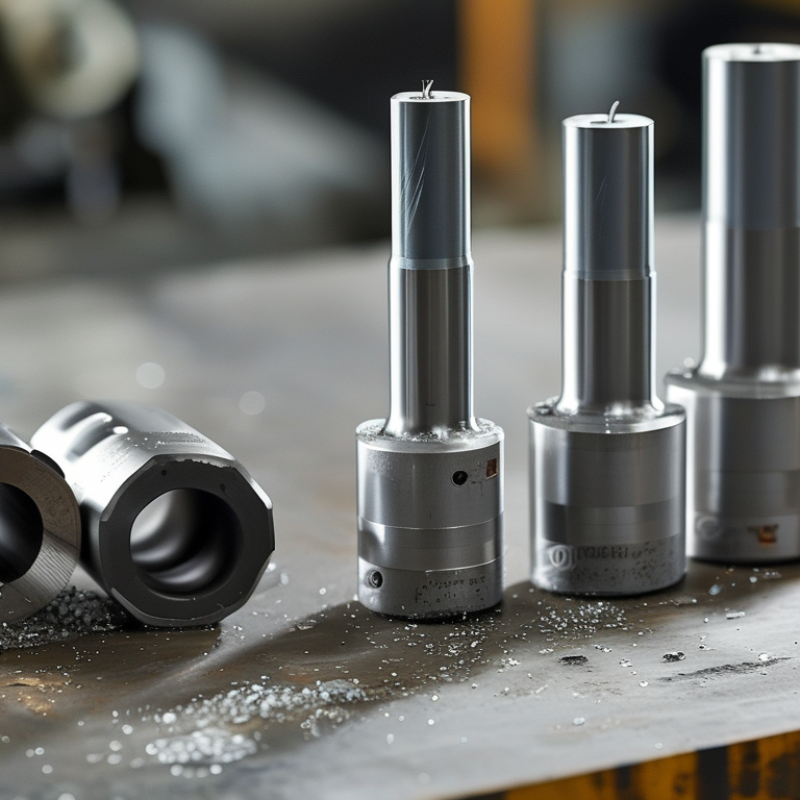
A replaceable cylindrical sleeve made from cemented tungsten carbide, normally consisting of tungsten carbide grains bonded with cobalt or another metallic binder. |
It is fitted over a roller core or used as the working surface of a roll to resist wear, pressure, impact, and repeated contact with metal products. |
| Material Composition |
Main hard phase and binder |
Tungsten carbide, commonly designated WC, combined with a metallic binder such as cobalt. The binder content is selected according to the required balance of hardness and toughness. |
WC provides hardness and wear resistance, while the binder improves fracture toughness and helps the sleeve withstand mechanical loading. |
| Material Structure |
Microstructure |
A hard WC grain skeleton dispersed in a continuous metallic binder phase. Grain size may range from submicron grades to coarser industrial grades. |
Grain size and binder distribution influence abrasion resistance, edge strength, impact resistance, and suitability for different rolling conditions. |
| Hardness |
Vickers hardness |
Approximately 1,100–2,200 HV30 for many cemented-carbide grades; the actual value depends on WC grain size and binder content. |
High hardness limits abrasive wear and helps maintain the sleeve profile during prolonged rolling or guiding operations. |
| Density |
Material density |
Approximately 12.5–15.2 g/cm³ for common WC-based cemented carbides. |
The high density reflects the tungsten-rich composition and is useful when estimating sleeve mass, balancing requirements, and handling loads. |
| Transverse Strength |
Transverse rupture strength |
Common industrial grades may provide approximately 1.5–4.0 GPa, depending on binder content, grain size, porosity, and manufacturing quality. |
This property indicates the sleeve's resistance to bending-related fracture and helps determine whether it can tolerate rolling forces and intermittent impact. |
| Elastic Modulus |
Young's modulus |
Generally about 500–700 GPa for WC-based cemented carbide. |
A high modulus limits elastic deformation, helping the roller maintain dimensional stability and consistent contact geometry under load. |
| Thermal Conductivity |
Heat-transfer capability |
Often approximately 50–110 W/(m·K), with the value affected by binder content, composition, and temperature. |
Good thermal conductivity assists heat removal from the working surface during high-speed rolling, although cooling design remains essential. |
| Dimensional Form |
Common geometry |
Hollow cylindrical form with an outside diameter, inside diameter, overall width, and sometimes grooves, chamfers, keyways, or cooling features. |
The geometry determines compatibility with the roller core, product size, contact pressure, alignment, and the final rolled profile. |
| Surface Finish |
Working-surface condition |
The working surface is normally ground or polished after sintering. Required roughness depends on the rolled material, process speed, and product specification. |
Controlled surface finish reduces friction, limits marking, improves dimensional consistency, and supports stable material flow through the roll gap. |
| Primary Wear Mode |
Abrasive and adhesive wear |
Typical damage mechanisms include abrasion, adhesion, surface fatigue, thermal cracking, edge chipping, and fracture caused by overload or misalignment. |
Identifying the dominant wear mode helps determine the appropriate carbide grade, cooling method, alignment procedure, and replacement interval. |
| Rolling Applications |
Typical equipment and products |
Used in selected wire, bar, rod, tube, section, and forming processes where high wear resistance is required. |
The sleeve guides, compresses, shapes, or supports the workpiece while reducing roll-surface deterioration compared with many conventional tool-steel solutions. |
| Dimensional Stability |
Resistance to profile loss |
Cemented carbide retains its working profile more effectively than softer roll materials under comparable abrasive conditions. |
Stable geometry helps maintain product diameter, section shape, surface quality, and process repeatability over the sleeve's service period. |
| Operating Temperature |
Thermal-service consideration |
Performance depends on grade, load, speed, cooling, and thermal cycling. Sudden temperature changes should be avoided because cemented carbide is hard but relatively brittle. |
Appropriate coolant flow, gradual heating and cooling, and prevention of thermal shock reduce the risk of cracking and premature failure. |
| Installation Requirement |
Sleeve-to-core fit |
The sleeve must be correctly matched to the roller core, with controlled interference or retention method, concentricity, axial positioning, and surface cleanliness. |
Correct installation prevents loosening, uneven loading, vibration, runout, edge damage, and localized premature wear. |
| Quality Inspection |
Key inspection items |
Common checks include dimensions, concentricity, roundness, surface finish, visual defects, hardness, density, porosity, and crack inspection. |
Inspection verifies that the sleeve meets the required mechanical, geometric, and surface specifications before it is installed in production equipment. |
| Selection Factors |
Process parameters |
Important factors include workpiece material, rolling speed, reduction, contact pressure, cooling conditions, impact level, required surface finish, and sleeve dimensions. |
A grade selected for the actual operating conditions can improve wear life and reliability without sacrificing toughness or increasing fracture risk. |
| Maintenance |
Recommended practice |
Inspect for cracks, chips, scoring, abnormal wear, overheating, runout, and coolant-related deposits; replace or regrind when dimensional limits are reached. |
Routine inspection helps identify process problems early and reduces unplanned downtime, product defects, and secondary damage to the roller assembly. |
| Core Advantage |
Performance benefit |
High wear resistance, high compressive strength, good dimensional retention, and suitability for demanding contact conditions. |
These characteristics make tungsten carbide roller sleeves a practical option for improving roll-surface durability and maintaining stable production quality. |
| Technical Limitation |
Failure sensitivity |
Cemented carbide is less tolerant of severe impact, tensile stress, misalignment, poor support, and rapid thermal shock than tougher steel materials. |
The sleeve should be designed and operated with adequate support, correct alignment, suitable cooling, and controlled loading to minimize chipping or fracture. |