China’s interior permanent magnet motor suppliers serve applications ranging from electric vehicles to pumps and industrial drives. Comparing them takes more than scanning a catalogue. Buyers need to examine power, speed range, efficiency data, cooling design, and production capability. A motor drawing may look convincing. Test conditions matter more.
For technical context, Professor Thomas A. Lipo is a recognized electric-machine researcher and author. A careful paraphrase of his design perspective is that motor performance depends on the complete electromagnetic and mechanical system, not the magnet alone. That principle helps explain why an Interior Permanent Magnet motor’s rotor geometry, steel laminations, control strategy, and thermal management deserve close review. Ask suppliers for test reports under stated operating conditions, along with details on insulation, vibration, and quality controls. A neat brochure is not enough.
This guide will help readers assess China-based suppliers through practical criteria: engineering support, customization, sample validation, delivery consistency, and after-sales service. Where possible, compare like with like, such as rated output at the same voltage and cooling method. Visit the factory or request an independent inspection when the project justifies it. No shortlist is perfect. Supplier claims can be difficult to compare, and smaller details may change after a design revision. That is worth questioning. A sound choice balances performance, evidence, and communication—not price alone.

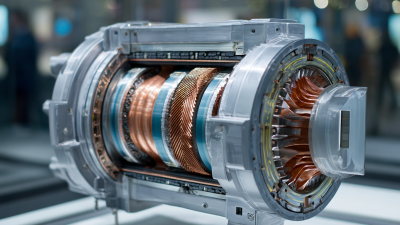
An interior permanent magnet (IPM) motor is a type of synchronous motor with permanent magnets embedded inside its rotor. The magnets sit beneath the rotor’s outer steel surface, rather than being attached to it. This arrangement lets the motor produce torque from both magnetic attraction and rotor reluctance. That detail matters. It can support strong torque and efficient operation across a useful speed range, depending on the design and control system.
Compared with a surface-mounted design, an IPM rotor can help protect magnets from mechanical stress at high speeds. Its performance still depends on factors such as magnet placement, cooling, rotor strength, and inverter tuning. In a workshop, engineers may assess temperature rise, vibration, and efficiency under changing loads. A motor that looks excellent on a data sheet may behave differently in a real machine. That is worth checking, not assuming.
Tips: When evaluating an IPM motor, ask for test conditions behind efficiency and torque figures. Compare operating speed, cooling method, and duty cycle with your application. Check whether the control system supports the required operating range. Small mismatches can matter.
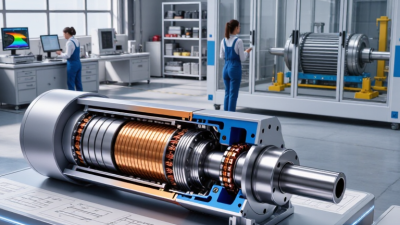
An interior permanent magnet (IPM) motor places magnets inside the rotor, rather than attaching them to its surface. This protected position helps the rotor withstand higher speeds. As the rotor turns, the magnets create a magnetic field that interacts with current in the stator windings. The rotor’s shape also produces reluctance torque, adding to the torque from the magnets. An inverter adjusts the current to control speed and output. The result can be strong low-speed torque and efficient operation across a broad speed range.
Not magic, just careful design.
IPM motors are common in electric vehicle traction systems, compressors, pumps, and precision industrial drives. In a vehicle, they can deliver useful torque from a standstill, then operate efficiently at cruising speeds. In a pump room, compact size and variable-speed control may help match output to demand.
Heat still matters. High temperatures can affect magnets and insulation, so cooling and duty cycle belong in any specification review. For buyers comparing suppliers in China, ask for test data at the intended speed, load, and temperature—not just peak efficiency. An IPM motor is not automatically the right choice; control requirements, service conditions, and total system cost can change the answer.
China’s interior permanent magnet motor supplier landscape includes established motor manufacturers, component specialists, and engineering firms that build motors to customer specifications. Their capabilities vary. Some focus on high-volume production, while others support smaller projects requiring custom rotor designs. Suppliers are commonly found near manufacturing and electronics supply chains, where access to steel laminations, magnets, machining, and testing services can shorten development cycles.
For buyers, a supplier’s technical process matters as much as its catalogue. Ask how it controls rotor magnet placement, shaft concentricity, and dynamic balance. These details affect vibration, noise, and performance at high speed. Request test data for efficiency, temperature rise, and field weakening under stated operating conditions. A single peak-efficiency figure is not enough. It needs context.
Factory visits can reveal practical differences: inspect sample rotors, measurement records, and end-of-line test equipment. Check whether the supplier can trace materials and repeat results across production batches. Claims should be verified against your own duty cycle, not accepted at face value. A polished brochure rarely shows the whole picture. Smaller suppliers may offer responsive engineering, but documentation can be uneven; that deserves careful review. Good communication helps, but it cannot replace validated samples and clear acceptance criteria.
Global electric car sales provide context for the expanding market for electric-drive components.
Global electric car sales rose from about 3 million in 2020 to more than 17 million in 2024. This market indicator is not a measure of interior permanent magnet motor sales or supplier market share. Source: International Energy Agency, Global EV Outlook 2025; figures rounded.
China Top Interior Permanent Magnet Motor Suppliers?
Key Capabilities to Compare Across Chinese Suppliers
Compare electromagnetic design, production control, and test evidence—not headline efficiency alone. For an interior permanent magnet motor, ask for torque-speed maps, efficiency curves, and field-weakening results at stated voltage and temperature. Check whether samples match production units. Small differences in magnet placement or rotor balance can affect vibration and performance.
Manufacturing depth matters. Review rotor lamination tolerances, magnet insertion methods, adhesive or retention processes, and inspection records. The International Energy Agency’s Global Critical Minerals Outlook 2024 estimates China produced about 94% of sintered permanent magnets in 2023. That scale supports a dense supply base, but it does not prove any individual supplier’s process quality. Numbers matter. Ask how suppliers track material batches and handle design changes.
Validation should resemble the intended duty cycle. Request thermal-rise, overspeed, durability, and vibration test reports, with conditions and sample counts clearly stated. The IEA’s Global EV Outlook 2024 reports nearly 14 million electric-car sales worldwide in 2023, highlighting the expanding application market. Still, vehicle demand is not a substitute for motor-level evidence. Test under load. A polished datasheet can leave gaps; verify test methods, production capacity, lead times, and engineering response with a technical review.
When selecting an interior permanent magnet motor supplier in China, check engineering evidence before comparing price. The IEA’s 2011 report, Energy-Efficient Electric Motor Systems, estimates motor-driven systems consume 43–46% of global electricity. Efficiency claims deserve careful verification. Ask for torque-speed curves, efficiency maps, and test conditions, including voltage, cooling method, and winding temperature. A polished datasheet is not proof.
For automotive applications, the IEA’s Global EV Outlook 2024 reports nearly 14 million electric cars were sold in 2023, around 18% of global car sales. That market growth makes production consistency important. Review rotor magnet retention, demagnetization performance, balancing results, and lamination-loss data. Request sample test reports, then compare them with measurements from your own operating range. Small differences matter.
Visit the factory, or arrange an independent audit. Check winding inspection, rotor assembly controls, calibration records, and traceability from materials to finished units. Ask how the supplier handles design changes and failed samples, not only successful tests. No audit is perfect. A capable supplier should explain limitations plainly and provide corrective-action evidence. One test cannot settle everything; production batches can still vary.
| Evaluation Area | Information to Request | Selection Benchmark | Weight |
|---|---|---|---|
| Application and design fit | Rated and peak torque, speed range, duty cycle, supply voltage, installation dimensions, shaft and mounting drawings, operating environment. | The supplier confirms the motor against the actual load profile and provides a motor data sheet, dimensional drawing, and a clearly documented operating envelope. Compare continuous and peak ratings separately. | 15% |
| Torque-speed and efficiency performance | Torque-speed curve, efficiency map across the operating range, test conditions, measurement method, and controller assumptions. | Request results at the speed and load points relevant to the application, not only a single peak-efficiency figure. Confirm whether reported performance is for the motor alone or the motor-and-drive system. | 15% |
| Thermal capability and insulation | Winding temperature limits, insulation system details, cooling method, temperature-rise test results, and thermal protection provisions. | Verify thermal performance at the intended ambient temperature, cooling arrangement, duty cycle, and installation conditions. Request the applicable test method and report rather than relying on an unsupported temperature claim. | 12% |
| Rotor and magnet design | Magnet grade and temperature rating, rotor retention method, overspeed capability, demagnetization assessment, and magnet sourcing controls. | Check that the supplier has assessed maximum operating temperature, current overload, and rotor mechanical stress for the proposed design. Request relevant design validation or test evidence. | 10% |
| Quality management and traceability | Quality-system certificate and scope, process-control plan, inspection records, lot traceability, nonconformance procedure, and change-control process. | Verify certificate validity and scope with the issuing body. Confirm traceability for key components and written notification procedures for changes to materials, processes, or manufacturing locations. | 12% |
| Testing and documentation | Routine and type-test reports, inspection plan, test-equipment calibration records, drawings, wiring information, and maintenance instructions. | Agree on acceptance tests before ordering. Relevant references may include IEC 60034-1 for rotating-machine ratings and performance, IEC 60034-2-1 for loss and efficiency test methods, and IEC 60034-5 for enclosure protection classification, where applicable. | 10% |
| Drive compatibility | Supported control modes, encoder or resolver options, feedback specifications, electrical interface, parameter documentation, and commissioning support. | Confirm compatibility with the intended inverter and control strategy through a witnessed or documented system test. Review low-speed operation, acceleration, braking, and fault behavior. | 8% |
| Prototype and production validation | Prototype lead time, sample build records, validation plan, first-article inspection, and production capacity information. | Use an agreed sample-approval process before volume production. Confirm that the production configuration matches the tested sample and that manufacturing capacity is supported by a documented plan. | 7% |
| Delivery and supply continuity | Quoted lead time, production schedule, capacity allocation, critical-component sourcing, packaging standard, and contingency plan. | Compare quoted lead times and delivery terms on the same basis. Ask how the supplier manages component shortages, production interruptions, and replacement-part availability. | 6% |
| Commercial terms and lifecycle cost | Quotation breakdown, tooling charges, minimum order quantity, warranty terms, payment terms, spare-parts pricing, and service costs. | Compare total cost over the expected operating life, including the motor, required drive or feedback equipment, energy use, maintenance, and replacement parts—not purchase price alone. | 5% |
Suggested use: Score each supplier from 1 to 5 for every area, multiply each score by its weight, and compare the weighted totals. Confirm application-specific requirements and acceptance criteria in writing before placing an order.