What Is an Alloy Steel Roller Sleeve?
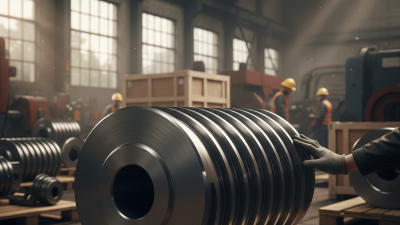
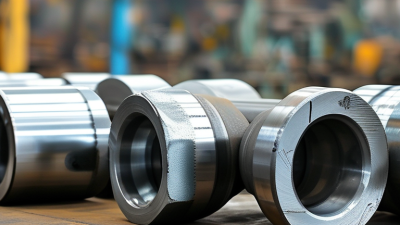
An Alloy Steel Roller Sleeve is a replaceable cylindrical component designed to protect shafts, guide material, or support repeated rolling contact. It commonly uses chromium, molybdenum, nickel, or carbon additions. These elements can improve hardness, toughness, wear resistance, and fatigue performance.
The market deserves careful attention. The World Steel Association’s World Steel in Figures 2025 reports approximately 1.88 billion tonnes of crude steel production in 2024. That scale reflects steel’s continuing importance across mining, construction, manufacturing, and heavy equipment. However, global production does not guarantee correct sleeve selection. A roller exposed to abrasive dust needs different protection from one facing impact loads or continuous heat.
Material knowledge matters.
Professor George Krauss, a widely cited steel metallurgist, wrote, “Steel is an alloy of iron and carbon.” His statement is simple, yet it explains why chemistry and heat treatment remain central to sleeve performance. In practice, a 4140 sleeve, a 4340 sleeve, and a hardened bearing-grade sleeve may look similar. Their service behavior can differ sharply. Surface hardness alone is not enough.
The exact term “Alloy Steel Roller Sleeve” is not perfectly standardized among suppliers. Buyers should confirm dimensions, hardness depth, surface finish, load cycles, lubrication, and failure history. ASTM material references can support comparison, but they cannot replace application testing. A small mismatch can create scoring, fretting, or premature cracking. Better decisions come from measurable operating evidence, not impressive catalog language. This guide examines construction, materials, manufacturing, performance limits, and selection practices with practical engineering context. Some assumptions may fail in unusual environments. That is worth acknowledging.
Definition and Function of an Alloy Steel Roller Sleeve
What Is an Alloy Steel Roller Sleeve?
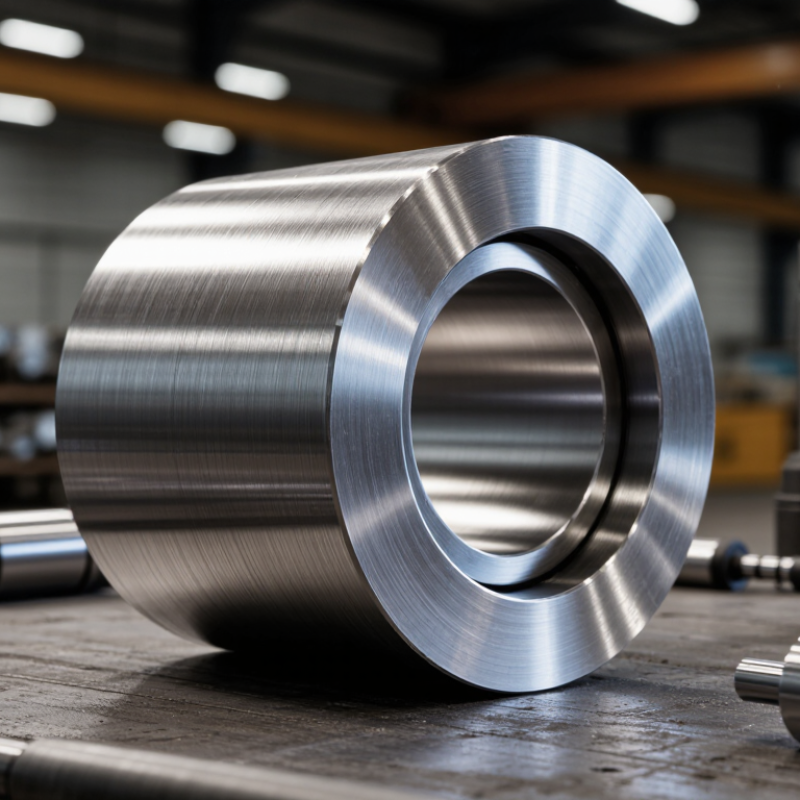
An alloy steel roller sleeve is a cylindrical component fitted around a roller shaft or bearing. It provides a hardened, replaceable surface for contact, rotation, and load transfer. Alloying elements such as chromium, nickel, or molybdenum can improve strength, toughness, and wear resistance.
Its function is practical. The sleeve protects the shaft from scoring, reduces replacement costs, and supports stable roller movement. Engineers select its steel grade, wall thickness, hardness, and surface finish according to load, speed, temperature, and lubrication. ASTM A29/A29M defines requirements for many alloy steel bars, including chemical composition and mechanical testing. These requirements support traceability, but they do not replace application-specific design.
The industry scale is significant. The World Steel Association’s World Steel in Figures 2024 reports about 1.89 billion tonnes of crude steel production in 2023. That figure highlights the material’s broad industrial importance, not a guaranteed sleeve life. Small alignment errors can still cause uneven wear. This is often underestimated.
Tips: Check shaft clearance before installation. Measure hardness across the working surface. Keep the sleeve clean and lightly lubricated. A very hard sleeve may resist wear, yet it can become less tolerant of impact. Review the real failure pattern before changing the alloy.
Typical Alloy Composition: Chromium, Nickel, Molybdenum, and Carbon
What Is an Alloy Steel Roller Sleeve?
Typical Alloy Composition: Chromium, Nickel, Molybdenum, and Carbon
An alloy steel roller sleeve is a replaceable cylindrical layer fitted over a roller body. It supports repeated contact, pressure, and sliding movement in demanding equipment. Its performance depends heavily on steel chemistry, heat treatment, surface finish, and operating conditions.
Chromium improves hardness, wear resistance, and resistance to oxidation. Nickel adds toughness and helps the sleeve absorb sudden loads without cracking easily. Molybdenum supports strength at elevated temperatures and reduces the risk of softening during service. Carbon increases hardness after heat treatment, but excessive carbon can reduce toughness. The correct balance matters more than any single element. A sleeve may look excellent on paper yet fail early if heat treatment is uneven. That possibility deserves honest attention.
Tips: Check the material certificate, hardness range, sleeve dimensions, and surface finish before installation. Match the composition to the load, temperature, lubrication, and expected wear pattern. Inspect contact surfaces for scoring, pitting, or uneven marks. Small defects can become obvious failures. In my experience, measuring the mating roller is just as important as selecting the sleeve. Clearance that seems acceptable during assembly may create vibration after heating. Regular inspection also helps identify whether the problem comes from the alloy, alignment, lubrication, or installation. No material choice compensates for poor fit.
Manufacturing Process: Forging, Heat Treatment, and Precision Machining
What Is an Alloy Steel Roller Sleeve?
An alloy steel roller sleeve is a replaceable cylindrical surface fitted over a roller core. It carries contact pressure, impact, and repeated sliding or rolling wear. Its value depends on the manufacturing process, not only on the steel grade. The World Steel Association reported about 1.89 billion tonnes of crude steel production in 2023. That scale supports broad alloy-steel availability, but it does not guarantee sleeve quality.
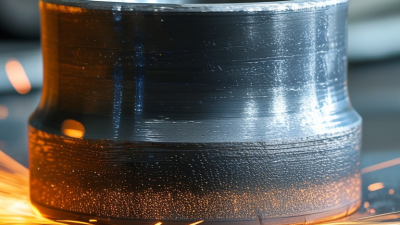
Manufacturing usually begins with closed-die or open-die forging. Forging compresses the grain structure and can reduce internal voids. The part is then normalized or quenched and tempered, depending on the required strength and toughness. Heat treatment must control distortion carefully. Excessive hardness may improve wear resistance, yet it can reduce shock tolerance.
I would not judge performance by hardness alone.
Precision machining follows heat treatment. Turning establishes the outer diameter, while boring controls the inner fit. Grinding can improve roundness and surface finish for demanding applications. Inspection should include hardness mapping, dimensional checks, and non-destructive testing where defects could create failure risks. ISO 2768 guidance is often used for general tolerances, but critical fits need tighter, drawing-specific controls.
The difficult point is consistency. A sleeve may look perfect and still contain uneven residual stress.
Good process records make that problem easier to find.
Performance Data: 50–65 HRC Hardness and 600–1,200 MPa Strength
What Is an Alloy Steel Roller Sleeve?
An alloy steel roller sleeve is a replaceable cylindrical component fitted over a roller or shaft. It protects the working surface from wear, impact, and repeated contact. In practical maintenance, its value depends on more than material selection. Fit, heat treatment, lubrication, and alignment also control service life.
Performance Data: 50–65 HRC Hardness and 600–1,200 MPa Strength
A hardness range of 50–65 HRC indicates strong resistance to indentation and abrasive wear. The lower end may offer better toughness under shock loading. The higher end can perform well in sliding or rolling contact. Tensile strength between 600 and 1,200 MPa reflects the sleeve’s load-bearing capacity, but test conditions matter. A hardness number alone can mislead. Surface hardness and core strength may differ after heat treatment.
Tips:
Check the load pattern before choosing hardness. Confirm the measured HRC value with a recognized test method. Inspect the sleeve after installation. Uneven marks may reveal misalignment, poor lubrication, or excessive clearance. Do not assume the hardest sleeve is always the best choice. It may resist wear, yet crack under sudden impact. In my experience, real performance often falls below the catalog figure when installation control is weak. That detail deserves honest review.
Industrial Applications in Conveyors, Mills, Rollers, and Heavy Equipment
What Is an Alloy Steel Roller Sleeve?
Industrial Applications in Conveyors, Mills, Rollers, and Heavy Equipment
An alloy steel roller sleeve is a replaceable cylindrical layer fitted over a roller core. It protects the core from abrasion, impact, heat, and repeated loading. Engineers select alloy steel because chromium, nickel, molybdenum, or manganese can improve strength and wear resistance. The exact performance depends on heat treatment, hardness, sleeve thickness, and operating conditions.
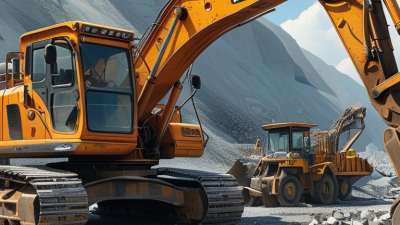
In conveyor systems, sleeves support bulk materials while reducing damage to the roller assembly. A quarry conveyor may expose the sleeve to sharp stone, dust, moisture, and sudden impact. In steel mills, the sleeve must tolerate high temperatures and intense contact pressure. Mill rolls also require controlled surface hardness, because excessive hardness can increase cracking risk. That balance is easy to underestimate.
Every application needs careful inspection. In heavy equipment, a sleeve may protect rollers used on tracked machines, compactors, or lifting systems. Operators should check for grooves, flaking, uneven wear, and looseness around the fit. Small defects can grow under vibration. Poor alignment often creates a wear pattern that looks like a material problem, although installation may be the real cause. This is where practical judgment matters. A harder sleeve is not always better. Engineers should verify load, speed, temperature, lubrication, shaft condition, and maintenance access before specifying an alloy steel grade. Mistakes still happen, especially when field measurements are incomplete.
What Is an Alloy Steel Roller Sleeve?
An alloy steel roller sleeve is a replaceable, high-strength cylindrical layer fitted over a shaft or roller body to improve wear resistance, load capacity, and service life in demanding equipment.
Typical Heat-Treated Hardness by Alloy Steel Grade
The chart shows representative hardness values commonly associated with alloy steels used in conveyor components, mill rollers, industrial rollers, and heavy equipment sleeves. Actual hardness depends on heat treatment, section size, and operating requirements.