Leave Your Message
Choosing the right Roller Sleeve can shape the finish, labor cost, and customer experience of a painting business. The choice is not merely about price or brand. It depends on the coating, surface texture, project size, and expected finish.
Brian Santos, a professional painting contractor and author of The Painter’s Handbook, emphasizes a practical rule: “The tool must match the surface, not the other way around.” This principle guides the discussion. A microfiber sleeve may leave a smooth finish on doors and cabinets. A thicker nap may carry more paint across rough masonry or textured walls. The wrong sleeve can shed fibers, create uneven coverage, or force repeated passes. That wastes time.
Small details matter. A 3/8-inch nap may suit lightly textured drywall. A 3/4-inch nap may perform better on concrete block. Solvent-based coatings also require compatible materials. Otherwise, the sleeve may swell, soften, or lose its shape.
This guide will compare nap length, fabric type, core design, diameter, and cleaning needs. It will also consider production speed and worker comfort. A contractor handling ten large rooms needs different equipment from a shop completing careful furniture restoration.
There is no perfect selection chart. Real surfaces vary. Weather changes drying behavior. Even experienced painters sometimes choose poorly after trusting a label too quickly. Testing a small area remains sensible. Observe the spread, texture, and cleanup before buying in bulk. That modest step can prevent expensive rework and protect a business’s reputation.
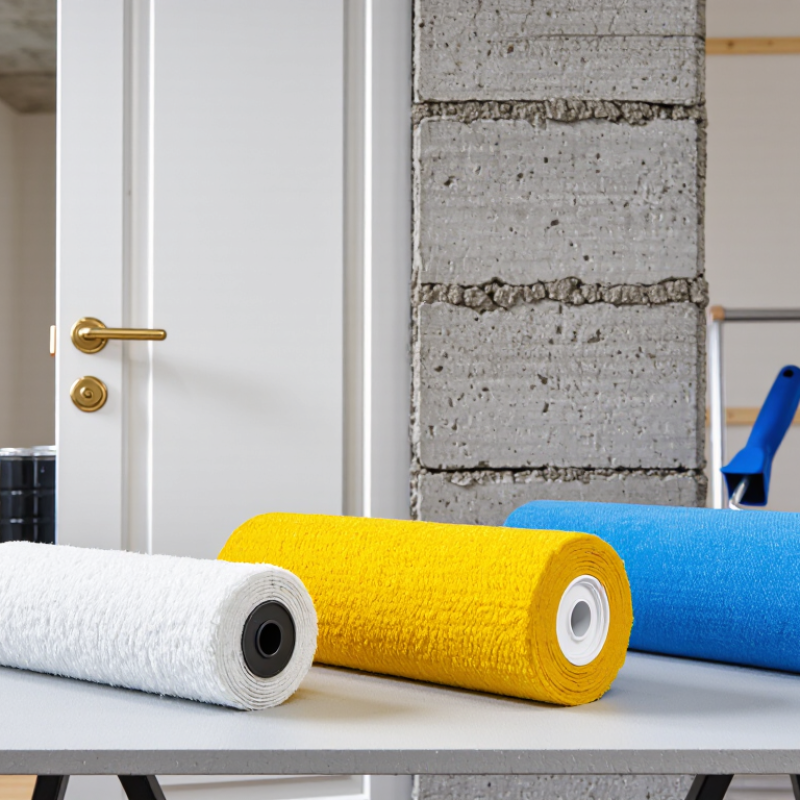
Choosing a roller sleeve starts with the surface profile, not the paint label. Smooth drywall usually needs a 3/8-inch nap. Lightly textured walls often perform better with 1/2-inch fibers. Rough masonry may require 3/4-inch or longer fibers to reach recessed areas. A sleeve that is too short leaves holidays. One that is too long can create an uneven film and visible stippling.
Coating type changes the decision. Water-based coatings generally work well with synthetic fibers, which resist swelling and maintain shape. Solvent-based coatings need fibers and adhesives that tolerate stronger solvents. Check the coating’s technical data sheet before purchasing. The wrong sleeve can shed fibers into a satin finish. That small defect becomes obvious under angled lighting. Fortune Business Insights reported the global paints and coatings market at about USD 206.56 billion in 2023, showing why consistent application remains a practical production concern.
Desired finish matters just as much. A 1/4-inch nap can support smoother finishes on properly prepared surfaces. A microfiber sleeve may reduce stippling, but it can hold less material. For large walls, that means more reloads. Test a small area first, then inspect it after drying. I sometimes choose a sleeve too quickly when the wall appears smooth. Primer texture proves otherwise. Record the nap, coating, coverage, and final appearance for repeat jobs. ASTM D3359 and ISO 2409 adhesion tests can help evaluate coating performance, but they cannot replace a careful test patch.
| Surface Profile | Typical Substrates | Common Coating Type | Recommended Nap | Suitable Sleeve Construction | Expected Finish | Business Use Case |
|---|---|---|---|---|---|---|
| Very smooth | Metal panels, cabinets, doors, trim, finely sanded wood | Water-based enamel, solvent-based enamel, clear coat, fine-finish acrylic | 3/16–1/4 in (5–6 mm) | High-density foam or fine microfiber | Very smooth, low stipple, minimal texture | Cabinet finishing, doors, furniture, precision maintenance work |
| Smooth | Plaster, drywall, smooth ceilings, plywood, previously painted walls | Interior latex or acrylic paint, wall primer, low-VOC coatings | 1/4–3/8 in (6–10 mm) | Microfiber or tightly woven polyester | Even coverage with a low, uniform stipple | Residential interiors, offices, retail spaces, repainting projects |
| Semi-smooth | Lightly textured drywall, lightly sanded masonry, textured wood | Acrylic, latex, alkyd, stain, primer | 3/8–1/2 in (10–13 mm) | Woven polyester or microfiber with good paint pickup | Balanced coverage and controlled texture | General contracting, maintenance, renovation, multi-surface work |
| Medium texture | Concrete block, textured plaster, rough drywall, wood siding | Exterior acrylic, masonry paint, elastomeric coating, bonding primer | 1/2–3/4 in (13–19 mm) | High-capacity woven polyester or microfiber | Fuller coverage with visible but consistent roller texture | Exterior walls, commercial maintenance, masonry repainting |
| Rough | Unpainted concrete, stucco, heavily textured walls, brick | Elastomeric coating, masonry coating, block filler, heavy exterior paint | 3/4–1 in (19–25 mm) | High-pile woven or knitted fabric with a strong core | Deep penetration and high film build; more pronounced texture | Masonry contractors, façade work, warehouses, industrial buildings |
| Very rough or deeply textured | Heavy stucco, deeply profiled concrete, textured block, porous masonry | High-build elastomeric coating, block filler, textured coating | 1–1¼ in (25–32 mm) | Extra-high-pile knitted fabric; durable, solvent-compatible core | Maximum loading and penetration; textured appearance remains visible | Large-area exterior projects and high-build protective applications |
| Smooth wood or previously sealed wood | Furniture panels, doors, shelves, sanded timber | Wood stain, water-based clear finish, polyurethane, varnish | 3/16–1/4 in (5–6 mm) | Fine microfiber or high-density foam, depending on product instructions | Thin, even film with reduced brush and roller marks | Joinery, furniture production, interior woodwork and refinishing |
| Metal or lightly profiled industrial surface | Prepared steel, machinery housings, storage tanks, metal doors | Alkyd, epoxy, polyurethane, direct-to-metal coating | 1/4–3/8 in (6–10 mm) | Solvent-resistant microfiber or woven fabric; verify chemical compatibility | Uniform protective film with controlled stipple | Industrial maintenance, equipment refurbishment, metal fabrication |
| Floor or high-wear surface | Prepared concrete floors, garage floors, sealed industrial slabs | Epoxy, polyurethane, floor sealer, high-build protective coating | 3/8–1/2 in (10–13 mm) | Lint-free, solvent-resistant woven or microfiber sleeve | Consistent film thickness with minimal lint and bubbling | Factories, garages, warehouses, workshops and commercial flooring |